Tesla’s FSD Technology Hits Roadblock: Unserved HW3 Cars Face Uncertainty
Tesla’s Full Self-Driving (FSD) technology has been a subject of fascination and controversy for years. The company has made significant strides in developing autonomous driving capabilities, but recent developments suggest that some Tesla owners may not benefit from the feature as expected.
What is FSD, and Why is it Important?
For the uninitiated, FSD is a suite of advanced driver-assistance systems (ADAS) designed to enable Tesla cars to navigate roads and traffic with minimal human intervention. The technology relies on a combination of cameras, radar, ultrasonic sensors, and GPS to make decisions in real-time. FSD has been touted as a game-changer in the automotive industry, promising to revolutionize the way we travel and interact with our vehicles.
However, FSD is not available in all Tesla models, and the feature’s rollout has been gradual. The company’s Hardware 3 (HW3) computer is a key component of the FSD system, and it’s currently used in a range of Tesla models, including the Model 3, Model S, and Model X.
The FSD Roadblock: HW3 Limitations Exposed
A recent revelation has sparked concerns among Tesla owners with HW3-equipped cars. It appears that these vehicles will not receive unsupervised FSD, at least not in the near future. The news was broken by Jay Peters, a seasoned automotive journalist, who cited Tesla’s FSD technology as being bound by software limitations.
So, what does this mean for HW3 owners? Essentially, they will not have access to the full FSD experience, which includes features like conditional traffic lights recognition, automatic lane changes, and even autonomous driving on highways. While Tesla has made significant progress in developing FSD, it seems that HW3 cars will be stuck in a perpetual beta phase, with the company continually tweaking and refining the software to ensure its safety and efficacy.
This news has sparked a debate among Tesla enthusiasts and critics alike, with some questioning the company’s decision to restrict FSD access to HW3 cars. Others see it as a necessary step to ensure the technology’s safety and reliability.
What’s Next for HW3 Owners and FSD?
While HW3 owners may not enjoy the full FSD experience, Tesla is committed to continually improving its technology. The company has announced plans to roll out FSD to more regions and vehicles over the coming months, with the goal of making the feature available to a broader audience.
However, HW3 owners will have to wait patiently for their turn. In the meantime, Tesla will continue to update its FSD software, refining the technology and addressing any issues that may arise. This process will likely take several years, and it’s unclear when or if HW3 cars will receive unsupervised FSD.
As the world waits with bated breath for the next-generation FSD technology, one thing is clear: Tesla’s commitment to developing autonomous driving capabilities is unwavering. While the company may have hit a roadblock with HW3 cars, it’s evident that FSD is an essential component of Tesla’s long-term vision for the automotive industry.
Key Points:
- Tesla’s FSD technology is restricted on HW3 cars due to software limitations.
- HW3 owners will not receive unsupervised FSD, at least not in the near future.
- Tesla is committed to continually improving its FSD technology and rolling out the feature to more regions and vehicles.
- HW3 owners will have to wait patiently for their turn to enjoy the full FSD experience.
Image Prompt:
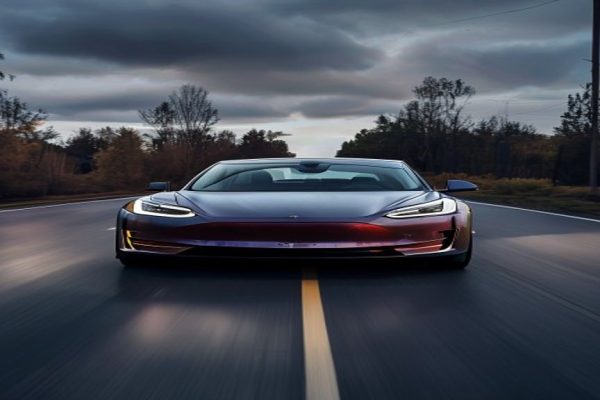
A Tesla Model S driving autonomously on a highway, with the navigation display showcasing the car’s surroundings and the FSD system’s decision-making process. The image should convey a sense of futuristic innovation and technological advancement.






Leave a Reply