Tesla’s FSD Update: A Game-Changer for Autonomous Driving?
Recent news from Tesla has left owners of HW3 (Hardware 3) vehicles with a mix of emotions. In a move that has sparked debate and curiosity, Tesla has announced that cars with HW3 architecture will not be eligible for unsupervised Full Self-Driving (FSD) capabilities. This decision has significant implications for the future of autonomous driving and Tesla’s plans in this space.
The Background: What is FSD and HW3?
For the uninitiated, FSD is Tesla’s advanced driver-assistance system (ADAS) designed to enable fully autonomous driving. It uses a combination of cameras, sensors, radar, and machine learning algorithms to navigate roads and handle traffic. HW3, on the other hand, refers to Tesla’s third-generation Autopilot hardware, which is capable of processing complex driving tasks.
The HW3 architecture is a significant improvement over its predecessor, HW2, with a more powerful processor and advanced sensor suite. However, despite its capabilities, HW3 has been criticized for its limitations in handling complex driving scenarios, such as construction zones, road closures, and poor weather conditions.
The Reason Behind the Decision: Technical Limitations
So, why has Tesla decided to exclude HW3 vehicles from unsupervised FSD capabilities? The answer lies in the technical limitations of the HW3 architecture. According to Tesla, the chip in HW3 is not powerful enough to handle the complex calculations required for FSD in all scenarios. This decision is not a reflection of the HW3’s capabilities but a recognition of its limitations.
Tesla has been working on a more advanced Autopilot hardware, HW4, which promises to bring even more sophisticated driver-assistance capabilities. However, the HW4 rollout has been delayed, and owners of HW3 vehicles will have to wait for further updates.
The Future Implications: What’s Next for Tesla and FSD?
The decision to exclude HW3 vehicles from unsupervised FSD capabilities has significant implications for Tesla’s future plans in the autonomous driving space. It highlights the company’s commitment to delivering safe and reliable driver-assistance systems, even if it means delaying the rollout of more advanced features.
Tesla has been at the forefront of the autonomous driving revolution, and its decision to prioritize safety and reliability will only strengthen its position in the market. However, the delay in FSD capabilities for HW3 owners may lead to some disappointment and frustration, particularly among those who have been waiting for this feature.
In conclusion, Tesla’s decision to exclude HW3 vehicles from unsupervised FSD capabilities is a testament to the company’s focus on safety and reliability. While it may be disappointing for some owners, it is a necessary step in the development of more advanced driver-assistance systems. As Tesla continues to push the boundaries of autonomous driving, we can expect to see significant advancements in the coming years.
Key Points:
- Tesla has announced that HW3 vehicles will not be eligible for unsupervised Full Self-Driving (FSD) capabilities.
- The decision is due to technical limitations of the HW3 architecture.
- Tesla is working on a more advanced Autopilot hardware, HW4, which promises to bring even more sophisticated driver-assistance capabilities.
- The delay in FSD capabilities for HW3 owners may lead to disappointment and frustration.
- Tesla’s focus on safety and reliability will only strengthen its position in the market.
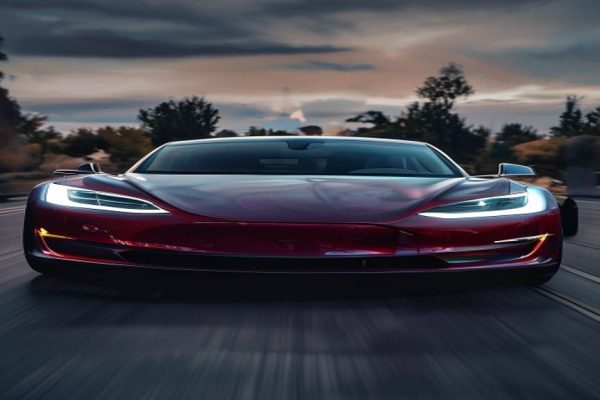
Image Prompt: A Tesla Model S parked on a deserted road, with a cityscape in the background. The car’s Autopilot system is engaged, with a subtle glow indicating the advanced driver-assistance capabilities. In the foreground, a small screen displays the FSD logo, with a red ‘X’ symbol indicating that the feature is not available for HW3 vehicles.






Leave a Reply