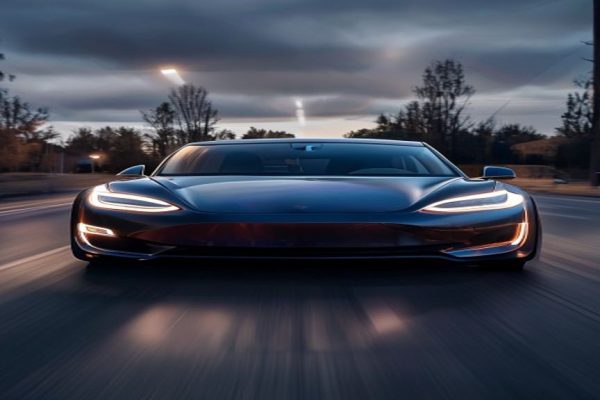
Tesla’s Full Self-Driving (FSD) Update Delay: A Closer Look
The recent announcement from Tesla that cars equipped with Hardware 3 (HW3) will not be receiving the highly anticipated unsupervised Full Self-Driving (FSD) update has left many owners and enthusiasts in a state of confusion. The decision, made by the electric vehicle manufacturer, has sparked a flurry of questions regarding the reasons behind this delay and its implications for the future of autonomous driving.
The Background: Hardware 3 and Full Self-Driving (FSD)
Tesla’s HW3 is a significant upgrade to the company’s previous hardware, offering improved processing power and enhanced sensor capabilities. The HW3 is designed to support a wide range of advanced features, including FSD, which promises to revolutionize the way we navigate our roads. FSD is a complex technology that relies on a combination of cameras, radar, and ultrasonic sensors to detect and respond to various situations, including pedestrians, traffic lights, and other vehicles.
However, FSD is not yet fully operational on HW3, and Tesla’s decision to delay the unsupervised FSD update has raised concerns about the company’s ability to meet its ambitious timeline. The delay is seen as a significant setback for Tesla’s autonomous driving ambitions, which have been a cornerstone of the company’s vision for the future of transportation.
The Reasons Behind the Delay
According to Tesla, the delay is due to the complexity of FSD and the need for further testing and validation. The company has emphasized that the HW3 requires a more robust and sophisticated software stack to support the advanced features offered by FSD. While Tesla has made significant strides in developing FSD, the technology still requires significant refinement and calibration to ensure safe and reliable operation.
Additionally, the delay may be a result of the challenges posed by the sheer scale and complexity of Tesla’s autonomous driving ecosystem. With millions of vehicles on the road, Tesla must ensure that its FSD update is thoroughly tested and validated to prevent any potential safety issues.
The Future Implications: What’s Next for Tesla’s Autonomous Driving Ambitions?
The delay in the unsupervised FSD update has significant implications for Tesla’s autonomous driving ambitions. While the company has made significant progress in developing FSD, the setback may lead to a prolonged period of testing and validation, potentially pushing the launch of the technology further into the future.
However, Tesla remains committed to its vision for autonomous driving, and the company is working tirelessly to refine and improve its FSD technology. With its significant investment in research and development, Tesla is well-positioned to overcome the challenges posed by FSD and deliver a safe and reliable autonomous driving experience to its customers.
In conclusion, the delay in the unsupervised FSD update is a significant setback for Tesla’s autonomous driving ambitions. However, the company’s commitment to refining and improving its FSD technology ensures that it remains a leader in the field of autonomous driving. As the industry continues to evolve, Tesla’s FSD technology will be a crucial factor in shaping the future of transportation.
Key Points:
- Tesla’s HW3 is designed to support advanced features, including FSD.
- The HW3 requires a more robust and sophisticated software stack to support FSD.
- Tesla has emphasized the need for further testing and validation of FSD.
- The delay may be a result of the challenges posed by the scale and complexity of Tesla’s autonomous driving ecosystem.
What’s Next for Tesla’s FSD Technology?
Tesla is working tirelessly to refine and improve its FSD technology, with a focus on delivering a safe and reliable autonomous driving experience to its customers. While the delay in the unsupervised FSD update is a setback, the company’s commitment to its vision for autonomous driving ensures that it remains a leader in the field.
In the coming months, Tesla is expected to release further updates on its FSD technology, including the highly anticipated FSD beta test. This test will provide owners with the opportunity to experience the latest advancements in FSD, with the company gathering feedback and data to further refine the technology.
As the industry continues to evolve, Tesla’s FSD technology will be a crucial factor in shaping the future of transportation. With its significant investment in research and development, the company is well-positioned to deliver a safe and reliable autonomous driving experience to its customers.






Leave a Reply