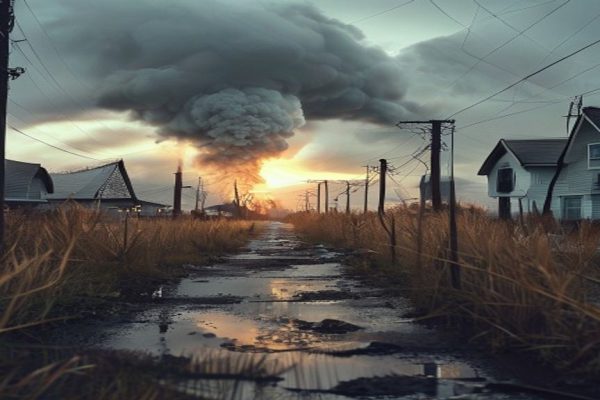
A Perfect Storm of Rising Utility Bills
The recent escalation in utility bills and oil and gas prices has left many households and businesses reeling. The situation is further complicated by the ongoing war in the Middle East and the increasing costs of protecting utility infrastructure from more extreme weather events.
The War in the Middle East: A Key Driver of Rising Utility Bills
The conflict in the Middle East has had a significant impact on global oil and gas prices. The region is home to a large proportion of the world’s oil reserves, and disruptions to production have led to a surge in prices. This, in turn, has driven up the cost of fuel for power generation, transportation, and other industries, ultimately leading to higher utility bills for consumers.
According to a report by the International Energy Agency (IEA), the global oil price has averaged over $100 per barrel in recent months, marking a significant increase from the $50 per barrel seen in 2020. This rise in oil prices has been particularly pronounced in the United States, where the average cost of fuel for power generation has risen by over 50% in the past year.
The Impact of Extreme Weather on Utility Infrastructure
In addition to the war in the Middle East, extreme weather events such as hurricanes, wildfires, and floods are also taking a toll on utility infrastructure. The increasing frequency and severity of these events are causing significant damage to power lines, transmission towers, and other critical infrastructure, leading to outages and disruptions to service.
A recent study by the Insurance Information Institute found that the cost of repairing and replacing damaged utility infrastructure has risen by over 20% in the past year, with many utility companies reporting significant losses due to extreme weather events.
The Economic Implications of Rising Utility Bills
The rising cost of utility bills has significant economic implications for households and businesses. Higher energy costs can lead to reduced disposable income, increased debt, and even business closures. In the United States alone, it is estimated that the average household spends over $1,000 per year on energy costs, with many low-income households spending a significant proportion of their income on utility bills.
The economic impact of rising utility bills is not limited to individual households, however. The increased cost of energy can also have broader economic implications, including reduced economic growth, increased inflation, and decreased competitiveness in global markets.
What’s Next for Utility Bills?
So, what can be done to mitigate the impact of rising utility bills? One potential solution is to increase investment in renewable energy sources such as solar and wind power. These sources are becoming increasingly cost-competitive with fossil fuels and can help to reduce dependence on imported oil and gas.
Another potential solution is to improve the resilience of utility infrastructure to extreme weather events. This can be achieved through the use of advanced materials and technologies, such as smart grids and distributed energy systems, which can help to reduce the impact of outages and disruptions to service.
In conclusion, the rising cost of utility bills is a complex issue with multiple drivers, including the war in the Middle East and the impact of extreme weather events on utility infrastructure. While there are potential solutions to mitigate the impact of rising utility bills, it is essential that policymakers, businesses, and individuals work together to address this critical issue and ensure a more sustainable and resilient energy future.
- Invest in renewable energy sources to reduce dependence on imported oil and gas.
- Improve the resilience of utility infrastructure to extreme weather events.
- Implement energy efficiency measures to reduce energy consumption and costs.
- Develop and deploy advanced technologies to support a more sustainable and resilient energy future.
Category: Business
Image Prompt: An AI-generated image of a stormy weather background with a utility pole in the foreground, with a red “Utility Bill” sign above it, surrounded by solar panels and wind turbines in the background.






Leave a Reply