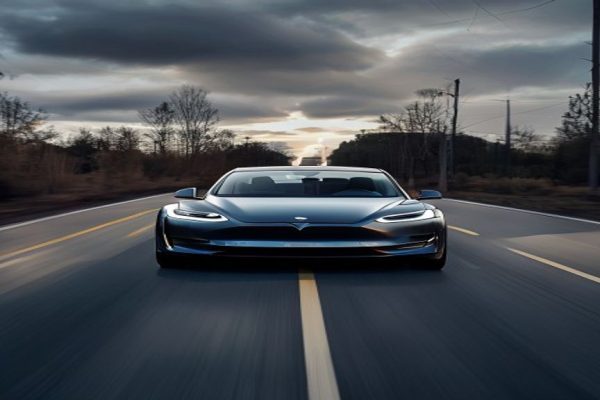
Tesla’s Autopilot Expansion Plans Hit a Roadblock
Tesla’s ambitious plans to expand its Autopilot features to more models have hit a roadblock. In a recent update, the company revealed that owners of its HW3-equipped vehicles will not be eligible for unsupervised Full Self-Driving (FSD) capabilities, at least not in the near future.
Background: Tesla’s Autopilot Evolution
Tesla’s Autopilot system, which uses a combination of cameras, radar, and ultrasonic sensors to enable semi-autonomous driving, has been a cornerstone of the company’s strategy to disrupt the automotive industry. Since its introduction in 2015, Autopilot has undergone several significant updates, with each iteration bringing improved performance, safety, and features.
However, despite its progress, Autopilot still falls short of true full autonomous driving. Tesla has been working to bridge this gap with its FSD capabilities, which promise to enable vehicles to navigate complex scenarios without human intervention. But the company’s plans to roll out FSD to more models have been met with regulatory hurdles and technical challenges.
The HW3 Limitation: Why Some Tesla Owners Will Miss Out
The HW3 hardware suite, which powers Tesla’s Autopilot system, is a critical component in the company’s efforts to achieve full autonomous driving. However, it appears that the HW3’s capabilities are not sufficient to support unsupervised FSD, at least not yet.
Tesla’s decision to limit FSD to newer models equipped with the more advanced HW3.5 hardware suite raises questions about the company’s commitment to supporting its older vehicles. While owners of HW3-equipped vehicles will still be able to access Autopilot’s semi-autonomous features, they will be denied the more advanced capabilities promised by FSD.
Future Implications: What This Means for Tesla and Its Owners
- Tesla’s decision to limit FSD to newer models may create a sense of unfairness among HW3 owners, who may feel that their vehicles are being left behind.
- The regulatory environment for autonomous vehicles is becoming increasingly complex, and Tesla’s struggles to roll out FSD may reflect the challenges facing the industry as a whole.
- The HW3 limitation may lead to a two-tiered Autopilot experience, with newer models receiving more advanced features and older models being relegated to basic semi-autonomous capabilities.
In conclusion, Tesla’s decision to limit FSD to newer models equipped with the HW3.5 hardware suite is a significant setback for the company’s plans to achieve full autonomous driving. As the industry continues to evolve, it remains to be seen how Tesla will address the needs of its older vehicle owners and navigate the complex regulatory landscape.
Image Prompt:
A futuristic illustration of a Tesla vehicle navigating a busy city street, with the words “Autopilot Expansion Plans” emblazoned across the top of the image. The vehicle should be depicted in a sleek, high-tech design, with a subtle gradient effect to convey a sense of advanced technology. In the background, a blurred image of a cityscape should provide context and depth to the scene. The overall mood should be one of innovation and progress, with a hint of uncertainty and challenge.






Leave a Reply