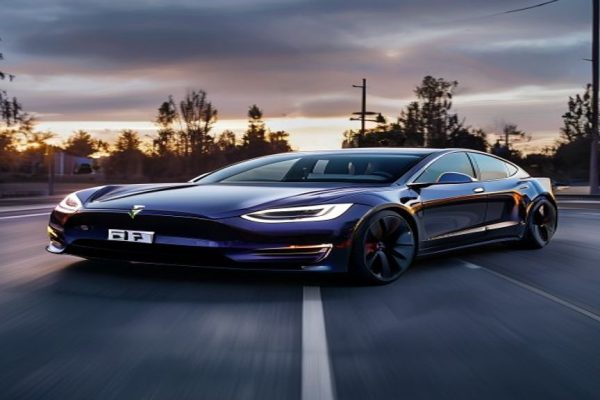
Tesla’s Full Self-Driving (FSD) Update Delayed for HW3 Vehicles
Tesla, the pioneering electric vehicle manufacturer, has announced that it will not be rolling out unsupervised Full Self-Driving (FSD) capabilities to its vehicles equipped with Hardware 3 (HW3) technology. This decision has left many in the tech and automotive industries pondering the implications of this move.
Background and Context
Tesla’s FSD technology is a cutting-edge autonomous driving system designed to allow its vehicles to navigate complex road scenarios without human intervention. However, the company has been cautious in its rollout, initially launching the technology in limited areas with human oversight. The HW3 hardware is the latest iteration of Tesla’s onboard computer, boasting improved processing power and enhanced sensor capabilities.
Given the accelerated pace of autonomous driving development, many expected Tesla to push the boundaries of FSD capabilities on HW3-equipped vehicles. However, the company’s decision to delay unsupervised FSD deployment suggests a more measured approach to ensuring the safety and reliability of its advanced driver-assistance systems (ADAS).
Reasons Behind the Delay
The reasons behind Tesla’s decision to delay FSD rollout on HW3 vehicles are multifaceted. One key factor is the need for further refinement and testing of the FSD algorithm, particularly in real-world scenarios. Tesla’s CEO, Elon Musk, has emphasized the importance of rigorous testing and validation of its ADAS, highlighting the need for human oversight in high-stakes situations.
Another factor contributing to the delay is the ongoing development of improved sensor suites and radar systems. Tesla is reportedly working on integrating advanced lidar technology into its vehicles, which will further enhance the accuracy and reliability of its FSD capabilities.
Future Implications and Plans
The delay in FSD rollout on HW3 vehicles has significant implications for the autonomous driving landscape. While some may view this as a setback for Tesla, others see it as a necessary step towards ensuring the safe and responsible development of ADAS.
Tesla has not provided a specific timeline for the release of unsupervised FSD capabilities on HW3 vehicles. However, the company has stated its commitment to delivering a comprehensive FSD experience, with ongoing improvements and updates expected in the coming months.
Key Points to Consider
- Tesla has delayed the rollout of unsupervised Full Self-Driving (FSD) capabilities on HW3 vehicles.
- The decision is likely driven by the need for further refinement and testing of the FSD algorithm.
- Improved sensor suites and radar systems are being developed to enhance FSD capabilities.
- Tesla is committed to delivering a comprehensive FSD experience, with ongoing improvements and updates expected.






Leave a Reply