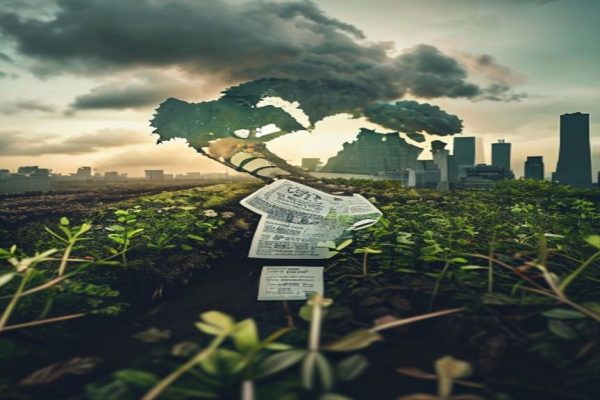
The Growing Concern of Climate Debt
The world’s largest carbon emitters, primarily developed countries, have been releasing massive amounts of greenhouse gases into the atmosphere since the Industrial Revolution. These emissions have led to a significant increase in global temperatures, causing devastating effects on the environment, ecosystems, and human societies. Some experts argue that the negative impacts of climate change can be quantified financially, creating a “climate debt” that future generations will have to pay.
What is Climate Debt?
Climate debt refers to the financial burden that current generations place on future generations due to their carbon emissions and other environmentally destructive activities. It’s a concept that has gained significant attention in recent years, particularly among climate activists and economists. By calculating the economic costs of climate change, experts hope to raise awareness about the urgent need for climate action and the importance of transitioning to renewable energy sources.
- The concept of climate debt is based on the idea that the benefits of fossil fuel consumption and other environmentally destructive activities are enjoyed by current generations, while the costs are shifted to future generations.
- Climate debt can be quantified by estimating the economic costs of climate change, including damage to infrastructure, loss of biodiversity, and human health impacts.
- The climate debt concept is not just a moral or ethical issue but also a financial one, as it highlights the need for climate action and the importance of investing in renewable energy sources.
Calculating the Climate Debt
Calculating the climate debt is a complex task that requires estimating the economic costs of climate change. One way to do this is by using the concept of “externalities,” which refers to the unintended consequences of economic activities that are not accounted for in market prices. For example, the cost of climate change is not reflected in the price of fossil fuels, but it can be estimated using various models and data sets.
Some studies have estimated that the climate debt owed by developed countries to developing countries could be as high as $100 trillion. This amount represents the economic costs of climate change, including damage to infrastructure, loss of biodiversity, and human health impacts. However, this figure is likely an underestimate, as it does not account for the full range of climate-related impacts.
Implications and Future Directions
The concept of climate debt has significant implications for climate policy and international cooperation. By acknowledging the climate debt owed to future generations, policymakers can take steps to reduce greenhouse gas emissions and transition to renewable energy sources. This requires a fundamental shift in our economic and social systems, prioritizing the well-being of people and the planet over profit and growth.
Furthermore, the climate debt concept highlights the need for climate justice and equity. Developing countries, which have contributed relatively little to greenhouse gas emissions, are often the most vulnerable to climate change. Therefore, it is essential to provide financial and technological support to these countries to help them adapt to climate change and transition to renewable energy sources.
In conclusion, the climate debt is a pressing issue that requires immediate attention. By quantifying the economic costs of climate change, we can raise awareness about the urgent need for climate action and the importance of transitioning to renewable energy sources. The climate debt concept also highlights the need for climate justice and equity, emphasizing the importance of international cooperation and collective action to address this global challenge.
As we move forward, it is essential to prioritize the well-being of people and the planet over profit and growth. This requires a fundamental shift in our economic and social systems, prioritizing sustainable development and environmental protection. By working together, we can create a more just and equitable world, where the benefits of economic development are shared by all, and the costs of climate change are borne by those who have benefited from it.






Leave a Reply