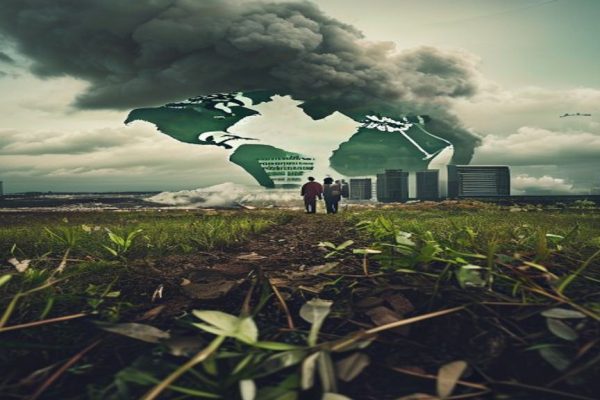
The Devastating Reality of Climate Change
The world’s largest carbon emitters have been wreaking havoc on the planet for decades, releasing enormous amounts of greenhouse gases into the atmosphere and causing catastrophic climate change. The consequences of this reckless behavior are multifaceted and far-reaching, affecting not just the present but also the future generations who will inherit a planet on the brink of collapse.
A Quantifiable Debt?
Some experts have attempted to put a price tag on the negative impacts of climate change, arguing that the damage caused can be quantified financially. This concept is known as the ‘climate debt’ or ‘ecological debt,’ and it represents the value of the losses and damages suffered by individuals, communities, and nations due to climate change. Proponents of this idea argue that the world’s largest carbon emitters owe a massive debt to future generations, which must be repaid to avoid further catastrophic consequences.
The Burden of Climate Change: Past, Present, and Future
Climate change is not just a future threat; it’s a reality that’s already being felt today. Rising sea levels, more frequent natural disasters, and extreme weather events are just a few of the devastating consequences of a warming planet. The past few years have seen some of the most destructive and costly climate-related disasters in history, from the 2019-2020 Australian bushfires to the 2021 European heatwave. The economic costs of these disasters are staggering, with estimates suggesting that the global economic losses from climate change could reach $1.2 trillion by 2050.
The situation is even more dire when looking at the future implications of climate change. The Intergovernmental Panel on Climate Change (IPCC) has warned that the world has just over a decade to take drastic action to limit global warming to 1.5°C above pre-industrial levels. Failure to do so will have catastrophic consequences, including more frequent and severe heatwaves, droughts, and storms, as well as the loss of entire ecosystems and species.
The climate debt is not just a moral obligation but also an economic necessity. As the world’s largest carbon emitters continue to pump greenhouse gases into the atmosphere, they are essentially accumulating a financial liability that will have to be paid off in the future. This debt will take many forms, from the cost of rebuilding and repairing damaged infrastructure to the economic losses suffered by communities and nations affected by climate-related disasters.
Key Points:
- The world’s largest carbon emitters owe a massive debt to future generations due to climate change.
- Climate change is a reality that’s already being felt today, with devastating consequences including rising sea levels, more frequent natural disasters, and extreme weather events.
- The economic costs of climate change are staggering, with estimates suggesting that the global economic losses could reach $1.2 trillion by 2050.
- The climate debt is not just a moral obligation but also an economic necessity, with the world’s largest carbon emitters accumulating a financial liability that will have to be paid off in the future.
A Call to Action
The climate debt is a pressing issue that demands immediate attention and action. The world’s largest carbon emitters must take responsibility for their actions and work towards reducing their greenhouse gas emissions to avoid further catastrophic consequences. This will require a collective effort, with governments, corporations, and individuals all playing a critical role in the transition to a low-carbon economy.
The future of our planet depends on it. We owe it to ourselves, our children, and future generations to take drastic action to mitigate the effects of climate change. The climate debt is a stark reminder of the consequences of our actions, and it’s time to pay the price for our reckless behavior.
Image Prompt:
A photograph of a devastated landscape, with a destroyed cityscape in the foreground and a massive cloud of smoke and ash rising in the background. The image should convey a sense of desperation and hopelessness, highlighting the devastating consequences of climate change. The cityscape should be recognizable as a real-world location, such as New York City or Sydney, to emphasize the global nature of the crisis. The image should be shot from a low angle, with the camera looking up at the devastation, to create a sense of awe and despair.






Leave a Reply