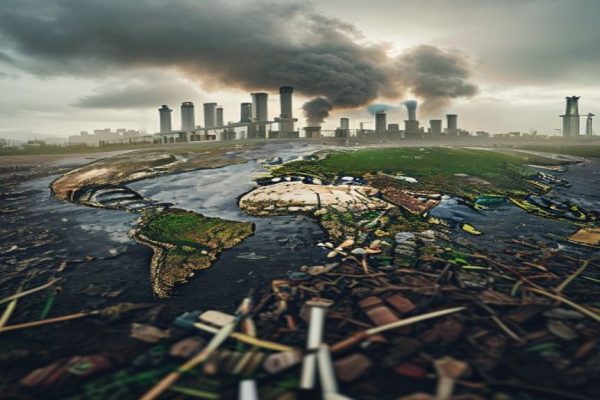
The Devastating Reality of Climate Change
The world’s largest carbon emitters, including the United States, China, and the European Union, are facing a harsh reality: their greenhouse gas emissions have led to irreversible damage to the planet, leaving future generations with a crushing debt to pay.
Quantifying the Debt
According to a recent study, the estimated cost of climate change to the global economy is a staggering $3.9 trillion, with the United States and China being the primary contributors. This debt is not just a financial burden but also a moral obligation for the current generation to pay for their actions.
The study suggests that the negative impacts of climate change, such as sea-level rise, droughts, and extreme weather events, can be quantified financially. By estimating the economic costs of these impacts, experts can put a price tag on the damages caused by climate change.
The Consequences of Climate Change
Climate change is having far-reaching consequences, from melting glaciers and rising sea levels to devastating wildfires and heatwaves. The impacts of climate change are not limited to the environment; they also affect human health, economies, and societies.
- Rising temperatures are responsible for heat-related illnesses and deaths.
- Extreme weather events, such as hurricanes and floods, are displacing communities and destroying infrastructure.
- Climate change is exacerbating social and economic inequalities, with the most vulnerable populations being the hardest hit.
The consequences of climate change are not just a distant threat but a harsh reality that is unfolding before our eyes. The world’s largest carbon emitters must take responsibility for their actions and work towards reducing their greenhouse gas emissions to mitigate the worst impacts of climate change.
A Call to Action
The crushing debt of climate change is a wake-up call for the world’s largest carbon emitters to take immediate action. This requires a coordinated effort from governments, corporations, and individuals to transition to renewable energy sources, reduce energy consumption, and protect natural habitats.
The cost of inaction far outweighs the cost of transitioning to a low-carbon economy. By investing in clean energy, energy efficiency, and climate resilience, we can not only reduce greenhouse gas emissions but also create jobs, stimulate economic growth, and ensure a sustainable future for generations to come.
The time for action is now. The world’s largest carbon emitters owe a huge debt to future generations, and it’s time to pay it back.
The Path Forward
The path forward is clear: a global transition to a low-carbon economy that prioritizes sustainability, equity, and climate action. This requires a collective effort from governments, corporations, and individuals to:
- Transition to renewable energy sources, such as solar and wind power.
- Improve energy efficiency and reduce energy consumption.
- Protect and restore natural habitats, such as forests and wetlands.
- Invest in climate resilience and adaptation measures.
The world’s largest carbon emitters have a responsibility to future generations to take action on climate change. By working together, we can reduce greenhouse gas emissions, mitigate the worst impacts of climate change, and create a sustainable future for all.
The crushing debt of climate change is a wake-up call for the world’s largest carbon emitters to take immediate action. The time for action is now, and the path forward is clear.
This article is part of our ongoing series on climate change and its impacts. Stay tuned for more updates and analysis on this critical issue.






Leave a Reply