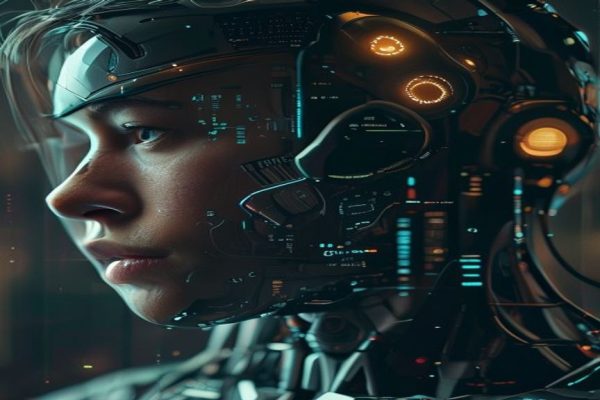
The Rise of Human-AI Interaction and the Anthropomorphism Paradox
In a world where AI has become an integral part of our daily lives, it’s easy to get caught up in the idea of ‘blaming’ the machine for our mistakes. But is it truly fair to hold AI responsible for human error? According to Julie Carpenter, a renowned expert in human-AI interaction and author of The Naked Android, the answer is a resounding no.
Understanding the Anthropomorphism Paradox
Anthropomorphism, or the act of attributing human-like qualities to non-human entities, is a natural phenomenon that has been observed throughout history. In the context of AI, it’s not uncommon to see humans assigning intentions, emotions, and even motivations to chatbots and other intelligent machines. Carpenter argues that this phenomenon is not just a quirk of human psychology, but rather a fundamental aspect of how we interact with technology.
‘We’ve been doing this for decades,’ Carpenter explains. ‘We talk to our cars, our phones, and even our refrigerators, as if they were human beings. It’s a way of making sense of the world, of creating a narrative that makes us feel more in control.’
- Carpenter believes that anthropomorphism is a key factor in how we interact with AI, and that it’s essential to understand this phenomenon in order to design more effective human-AI interfaces.
- She argues that the rise of generative AI tools, like ChatGPT, has created a new level of complexity in human-AI interaction, as users are increasingly likely to attribute human-like qualities to these machines.
- Carpenter suggests that this ‘blame game’ mentality is not only unfair to AI, but also damaging to human users, who may become less responsible and more prone to making mistakes.
The Consequences of Anthropomorphism
The consequences of anthropomorphism in human-AI interaction are far-reaching and multifaceted. On the one hand, it can lead to a more engaging and user-friendly experience, as humans are more likely to form emotional connections with machines that seem to ‘understand’ them. On the other hand, it can also create a false sense of security, leading humans to rely too heavily on AI and neglect their own critical thinking skills.
Carpenter warns that the ‘blame game’ mentality can have serious consequences, including:
- Decreased user responsibility: When humans attribute human-like qualities to AI, they may become less accountable for their own actions and decisions.
- Increased reliance on AI: As humans become more reliant on AI, they may lose the ability to think critically and make informed decisions.
- Misaligned expectations: When humans attribute human-like qualities to AI, they may create unrealistic expectations about what the machine can do, leading to disappointment and frustration.
Designing More Effective Human-AI Interfaces
So, what can be done to mitigate the negative consequences of anthropomorphism in human-AI interaction? According to Carpenter, it’s essential to design more effective human-AI interfaces that acknowledge and address this phenomenon. This may involve:
- Clearly communicating the limitations and capabilities of AI
- Designing interfaces that are transparent and explainable
- Encouraging critical thinking and user responsibility
By understanding the anthropomorphism paradox and designing more effective human-AI interfaces, we can create a more harmonious and productive relationship between humans and machines.
The Future of Human-AI Interaction
As AI continues to evolve and become increasingly integrated into our daily lives, it’s essential to address the anthropomorphism paradox head-on. By acknowledging the complex and multifaceted nature of human-AI interaction, we can create a more responsible and sustainable future for both humans and machines.
Carpenter’s work offers a valuable perspective on this critical issue, and her insights are essential reading for anyone interested in the future of human-AI interaction.
As we move forward into an increasingly AI-driven world, it’s time to rethink our assumptions about human-AI interaction and acknowledge the complexities of the anthropomorphism paradox. By doing so, we can create a more responsible, more productive, and more harmonious relationship between humans and machines.
In conclusion, the anthropomorphism paradox is a critical issue that requires our attention and understanding. By acknowledging the complexities of human-AI interaction and designing more effective interfaces, we can create a more sustainable and responsible future for both humans and machines.
Carpenter’s work offers a valuable perspective on this critical issue, and her insights are essential reading for anyone interested in the future of human-AI interaction.






Leave a Reply