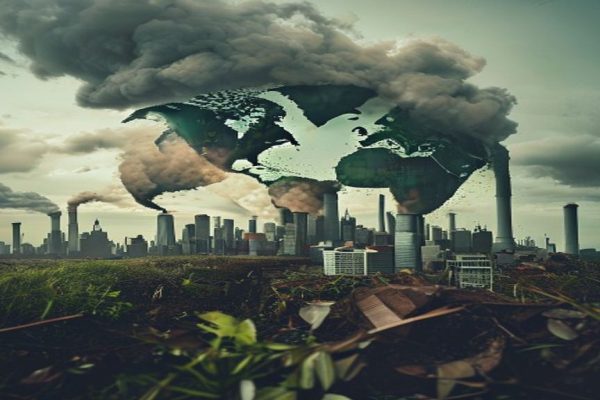
The Growing Concern of Climate Debt
The world’s largest carbon emitters, primarily developed countries, have been releasing massive amounts of greenhouse gases into the atmosphere, leading to catastrophic effects of climate change. Rising temperatures, melting glaciers, and more frequent natural disasters are just a few of the devastating consequences of their actions.
However, some experts argue that the negative impacts of climate change can be quantified financially, giving rise to the concept of ‘climate debt.’ This debt is essentially the amount of money required to restore the planet to its pre-industrial state, or at least mitigate the effects of climate change.
Quantifying Climate Debt
Calculating climate debt is a complex task, as it involves considering various factors such as the amount of greenhouse gases emitted, the resulting damage to the environment, and the cost of repairing or adapting to these changes. One approach is to use a ‘carbon pricing’ system, where a price is assigned to each ton of CO2 emitted. This price can then be used to calculate the total cost of greenhouse gas emissions.
Another method is to use the ‘social cost of carbon’ (SCC) approach, which estimates the economic damage caused by each ton of CO2 emitted. The SCC takes into account factors such as the impact on human health, agriculture, and infrastructure. By using the SCC, researchers can estimate the total cost of climate change and assign a financial value to the damage caused.
The Financial Implications of Climate Debt
The financial implications of climate debt are staggering. According to a 2020 report by the Carbon Disclosure Project (CDP), the world’s largest carbon emitters, including the United States, China, and the European Union, owe a total of $1.4 trillion to future generations. This amount is equivalent to the GDP of many developed countries.
Furthermore, the report estimates that if greenhouse gas emissions continue to rise at their current rate, the total cost of climate change could reach $5.5 trillion by 2025. This translates to a significant burden on future generations, who will have to bear the costs of repairing the damage caused by current carbon emissions.
What Can Be Done to Address Climate Debt?
So, what can be done to address climate debt? One solution is for governments and corporations to implement policies and practices that reduce greenhouse gas emissions. This can include transitioning to renewable energy sources, increasing energy efficiency, and promoting sustainable land use practices.
Another approach is to establish a global carbon pricing system, which would assign a price to each ton of CO2 emitted. This would create a financial incentive for companies and individuals to reduce their carbon footprint and invest in clean technologies.
Conclusion
Climate debt is a pressing issue that requires immediate attention. By quantifying the financial implications of climate change, we can better understand the extent of the problem and work towards solutions. Governments, corporations, and individuals must come together to address climate debt and ensure a sustainable future for all.
Key points:
- The world’s largest carbon emitters owe a total of $1.4 trillion to future generations.
- The total cost of climate change could reach $5.5 trillion by 2025.
- Establishing a global carbon pricing system can create a financial incentive for reducing carbon emissions.
- Transitioning to renewable energy sources and increasing energy efficiency can help reduce greenhouse gas emissions.
Image prompt: A map of the world with a large debt clock in the center, surrounded by images of climate change-related disasters such as hurricanes, wildfires, and melting glaciers.






Leave a Reply