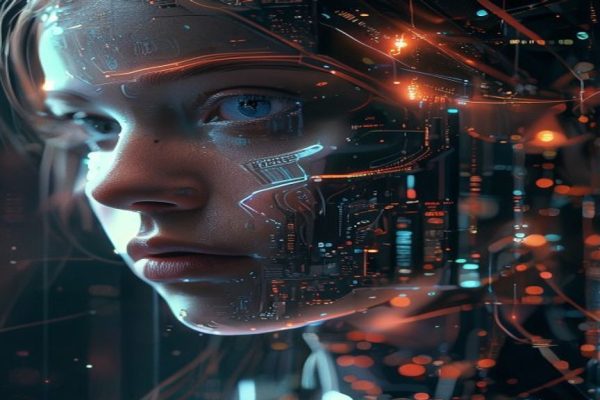
The Rise of Generative AI: Blurring Lines Between Humans and Machines
As the world becomes increasingly reliant on artificial intelligence (AI), the lines between humans and machines are becoming increasingly blurred. Generative AI tools, such as ChatGPT, are revolutionizing the way we interact with technology, making it difficult to distinguish between human-like conversations and machine-generated responses.
The Impact of Generative AI on Human-AI Interaction
Julie Carpenter, a renowned expert in human-AI interaction and author of The Naked Android, emphasizes that humans have always been inclined to attribute human-like qualities to non-human entities. She argues that this phenomenon, known as anthropomorphism, is a natural consequence of our brains’ tendency to create meaning and familiarity in complex systems.
Carpenter’s statement has sparked a heated debate among experts, with some arguing that generative AI tools are pushing the boundaries of what we consider ‘human’. As AI systems become increasingly sophisticated, we are forced to reevaluate our understanding of consciousness, intelligence, and human identity.
The Dark Side of Generative AI: Potential Risks and Consequences
While generative AI tools have the potential to transform industries and revolutionize the way we live, they also pose significant risks and consequences. One of the most pressing concerns is the spread of misinformation and fake news. As AI systems can generate convincing and persuasive content, it becomes increasingly difficult to distinguish between fact and fiction.
Another concern is the potential for AI systems to manipulate human emotions and behavior. By leveraging our natural inclination to anthropomorphize, AI systems can create a false sense of connection and intimacy, leading to unintended consequences such as emotional manipulation and exploitation.
The Future of Human-AI Interaction: Navigating the Challenges and Opportunities
As generative AI tools continue to evolve and improve, it is essential that we develop a deeper understanding of their potential risks and consequences. By acknowledging the challenges and opportunities presented by these technologies, we can work towards creating a future where humans and machines coexist in harmony.
Key points to consider:
- Generative AI tools are blurring the lines between humans and machines
- Anthropomorphism is a natural consequence of human-AI interaction
- Potential risks and consequences of generative AI include misinformation, emotional manipulation, and exploitation
- Developing a deeper understanding of generative AI is essential for navigating the challenges and opportunities presented by these technologies
Conclusion
The rise of generative AI is a double-edged sword. On one hand, it has the potential to revolutionize industries and transform the way we live. On the other hand, it poses significant risks and consequences that must be acknowledged and addressed. By working together, we can create a future where humans and machines coexist in harmony, leveraging the benefits of generative AI while mitigating its risks.






Leave a Reply