Historic Development in Urban Air Mobility
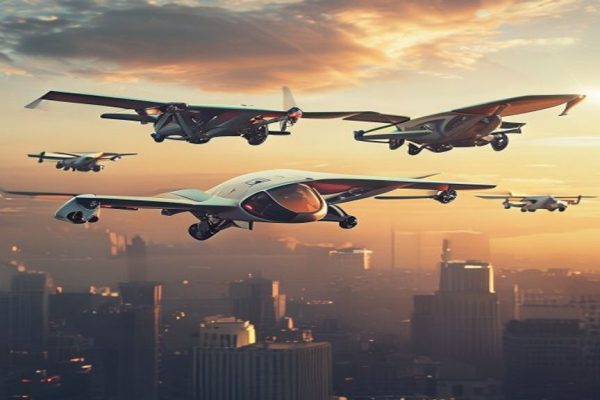
The United States is on the cusp of a transportation revolution, as new types of aircraft, often referred to as flying cars or personal aerial vehicles (PAVs), are poised to enter US airspace by June. These innovative machines, which can take off and land vertically like helicopters but travel long distances like airplanes, promise to transform the way people move around cities.
The introduction of flying cars, developed by companies such as Joby Aviation, Lilium, and Uber Elevate, marks a significant step forward in urban air mobility. These electric vertical takeoff and landing (eVTOL) aircraft are designed to be quiet, emission-free, and capable of carrying multiple passengers over short to medium distances.
Background and Context
The concept of flying cars has been around for decades, but significant technological advancements and regulatory breakthroughs have made it possible for these vehicles to become a reality. In 2020, the US Federal Aviation Administration (FAA) issued new guidelines for the operation of eVTOL aircraft, paving the way for companies to begin testing and certification processes.
- The FAA’s new regulations allow for the operation of eVTOL aircraft in urban areas, subject to specific safety requirements and pilot training standards.
- The guidelines also establish a framework for the certification of eVTOL aircraft, including requirements for design, testing, and maintenance.
Future Implications and Concerns
The introduction of flying cars has the potential to significantly reduce traffic congestion, decrease travel times, and increase access to remote areas. However, it also raises concerns about noise pollution, privacy, and safety.
Experts warn that the proliferation of flying cars could lead to a range of issues, including:
- Noise pollution: eVTOL aircraft can be loud, and the increased number of flights could disrupt residential areas.
- Privacy concerns: flying cars could potentially infringe on individuals’ right to privacy, particularly if they are equipped with cameras or other sensors.
- Safety risks: the introduction of flying cars could lead to an increase in accidents, particularly if pilots are not properly trained or if the aircraft are not designed with safety in mind.
Regulatory Framework and Public Acceptance
The successful integration of flying cars into US airspace will depend on the development of a robust regulatory framework and public acceptance of these new vehicles. The FAA has established a clear set of guidelines for the operation of eVTOL aircraft, but it remains to be seen how effectively these regulations will be enforced.
Public acceptance will also be crucial, as flying cars could potentially disrupt traditional transportation habits and raise concerns about safety and noise pollution. Companies such as Joby Aviation and Uber Elevate are working to build public support for their flying car projects, but it remains to be seen how far they will get.
Ultimately, the successful integration of flying cars into US airspace will require a careful balance between innovation, regulation, and public acceptance. As the first flying cars begin to take to the skies in June, it will be fascinating to see how this new technology evolves and shapes the future of transportation.
Image Prompt: A futuristic illustration of a flying car taking off from a rooftop helipad in a bustling city, with a sleek, high-rise building in the background. The flying car is depicted in a bright, metallic color, with a clear view of the cockpit and passengers on board. The background is a deep blue, representing the sky, with a few wispy clouds scattered about. The overall mood of the image is one of excitement and possibility, capturing the promise of this new technology.






Leave a Reply