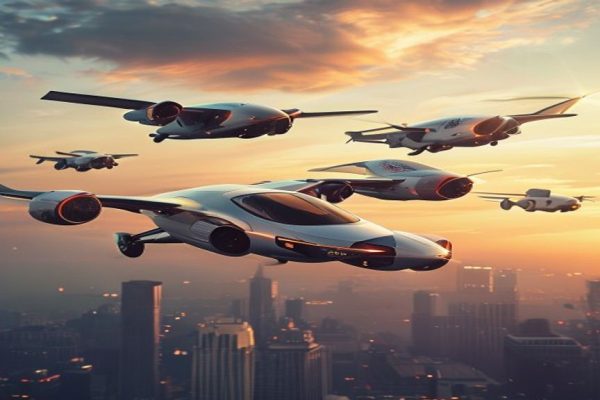
Revolutionary Flying Cars Poised to Transform US Airspace
The United States is on the cusp of a significant revolution in air travel, as new types of aircraft that blend the capabilities of helicopters and airplanes are set to enter US airspace as early as June. These flying cars, also known as vertical takeoff and landing (VTOL) aircraft, have been in development for several years and promise to transform the way people travel, both for personal and commercial purposes.
Background and Context
The concept of VTOL aircraft has been around for decades, but recent advancements in technology have made it possible to design and build vehicles that can take off and land with minimal space, similar to helicopters, but with the range and speed of airplanes. These vehicles use a combination of rotors, fans, and propellers to generate lift and propulsion, allowing them to operate in a variety of environments and conditions.
The development of VTOL aircraft has been driven by the need for more efficient and sustainable modes of transportation, particularly in urban areas where traditional airports and airfields may not be feasible. With the ability to take off and land vertically, VTOL aircraft can operate from small, rooftop pads or even vacant parking lots, reducing congestion and noise pollution in densely populated areas.
Key Features and Benefits
- Increased Efficiency: VTOL aircraft can travel at speeds of up to 200 miles per hour, making them faster than traditional helicopters, and with a range of up to 500 miles, they can cover longer distances without the need for refueling.
- Reduced Noise Pollution: By operating at a higher altitude and using advanced noise-reducing technologies, VTOL aircraft can minimize their impact on local communities and reduce noise pollution.
- Improved Safety: VTOL aircraft are designed with multiple redundancies and safety features, including redundant rotors and propellers, to ensure safe operation in a variety of conditions.
Future Implications and Opportunities
The introduction of VTOL aircraft in US airspace is expected to have far-reaching implications for various industries, including transportation, logistics, and tourism. With the ability to operate in a variety of environments and conditions, VTOL aircraft are poised to transform the way people travel, both for personal and commercial purposes.
Some of the key opportunities and challenges associated with VTOL aircraft include:
- Job Creation: The development and operation of VTOL aircraft are expected to create new job opportunities in manufacturing, maintenance, and operations.
- Increased Accessibility: VTOL aircraft can provide access to remote or hard-to-reach areas, making it easier for people to travel and conduct business.
- Regulatory Frameworks: The US government will need to establish clear regulatory frameworks to ensure safe and efficient operation of VTOL aircraft, including licensing, certification, and air traffic control procedures.
As the US prepares to welcome VTOL aircraft into its airspace, it is clear that this technology has the potential to transform the way people travel and conduct business. While there are still many challenges to be addressed, the benefits of VTOL aircraft are undeniable, and it is likely that this technology will play a major role in shaping the future of transportation and beyond.
Image Prompt:






Leave a Reply