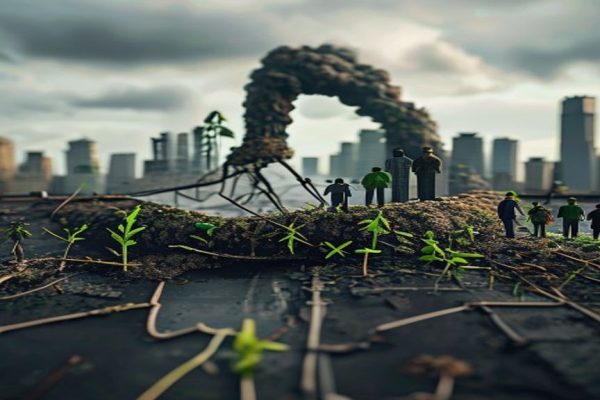
Climate Change’s Financial Toll: A Growing Debt to Future Generations
The world’s largest carbon emitters have long been aware of their impact on the environment. However, a growing number of experts argue that their actions come with a significant financial price tag. This ‘carbon debt’ can be calculated and quantified, providing a stark reminder of the consequences of inaction on climate change.
The Origins of the Carbon Debt
The concept of a carbon debt is relatively simple: it represents the estimated financial cost of the negative impacts of climate change, such as rising sea levels, more frequent natural disasters, and altered ecosystems. These impacts will be felt by future generations, who will inherit a planet that has been irreparably damaged by human activities. By quantifying this debt, experts aim to raise awareness about the need for immediate action to mitigate climate change.
The roots of the carbon debt can be traced back to the Industrial Revolution, when the widespread use of fossil fuels transformed the way energy was produced and consumed. As countries industrialized, their carbon emissions skyrocketed, leading to a significant increase in greenhouse gases in the atmosphere. This, in turn, has led to the current climate crisis, with devastating consequences for the environment and human societies.
The Cost of Climate Change: A Growing Debt
The financial cost of climate change is estimated to be in the trillions of dollars. A study by the University of Oxford found that the global economy will suffer losses of up to $43 trillion by 2050 if greenhouse gas emissions continue to rise at their current rate. This figure is expected to increase to over $100 trillion by the end of the century.
The costs of climate change are multifaceted and far-reaching. Rising sea levels and more frequent natural disasters will lead to increased damage to infrastructure, loss of property, and displacement of communities. Altered ecosystems will impact agriculture, forestry, and fisheries, leading to food and water shortages.
What Does the Future Hold?
As the world’s largest carbon emitters continue to pump greenhouse gases into the atmosphere, the carbon debt will only continue to grow. However, there is still hope for a more sustainable future. By transitioning to renewable energy sources, increasing energy efficiency, and implementing policies to reduce emissions, we can mitigate the worst impacts of climate change.
The cost of inaction far outweighs the cost of action. Investing in clean energy and sustainable technologies can create jobs, stimulate economic growth, and reduce greenhouse gas emissions. Moreover, by quantifying the carbon debt, we can raise awareness about the need for immediate action and encourage policymakers to make informed decisions about our energy future.
Key Takeaways:
- The carbon debt represents the estimated financial cost of the negative impacts of climate change.
- The global economy will suffer losses of up to $43 trillion by 2050 if greenhouse gas emissions continue to rise.
- By transitioning to renewable energy sources, increasing energy efficiency, and implementing policies to reduce emissions, we can mitigate the worst impacts of climate change.
- The cost of inaction far outweighs the cost of action, and investing in clean energy and sustainable technologies can create jobs, stimulate economic growth, and reduce greenhouse gas emissions.
In conclusion, the carbon debt is a stark reminder of the consequences of inaction on climate change. By quantifying this debt, experts aim to raise awareness about the need for immediate action and encourage policymakers to make informed decisions about our energy future. The future is in our hands – let us choose to act.
**Image Prompt:** A dramatic image of a planet ravaged by climate change, with melting ice caps, rising sea levels, and devastated natural landscapes. In the background, a subtle image of a child holding a sign reading ‘Our Future’ or ‘Save the Planet.’ The image should convey a sense of urgency and hope for a better future.






Leave a Reply