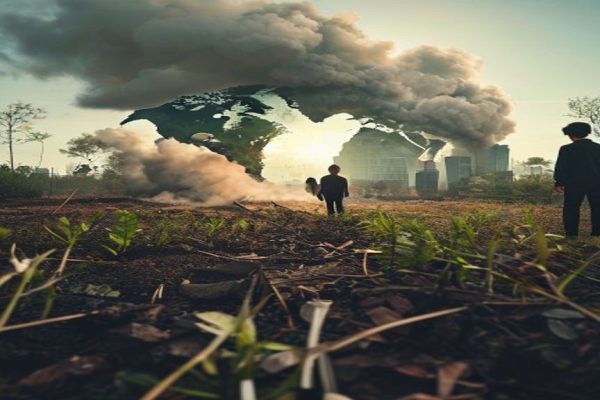
The Unsettling Reality of Climate Change
The world is facing an unprecedented crisis. Climate change, driven by human activities such as burning fossil fuels and deforestation, is having a devastating impact on our planet. Rising temperatures, more frequent natural disasters, and unpredictable weather patterns are just a few of the consequences we’re experiencing. But what’s often overlooked is the financial burden that future generations will inherit due to our actions.
Quantifying the Climate Debt
Some experts argue that the damage caused by climate change can be quantified financially. This concept is known as the ‘climate debt.’ It refers to the estimated costs of repairing the damage caused by climate change, as well as the costs of adapting to a warmer world. This debt is owed to future generations, who will inherit a planet that’s been irreparably harmed by our actions.
The climate debt is a complex issue, and there’s no single figure that can accurately calculate its total value. However, some studies have estimated that the costs of climate change could reach as high as $1 trillion per year by 2050. This includes the costs of repairing damaged infrastructure, restoring ecosystems, and supporting communities that have been displaced by climate-related disasters.
The Consequences of Inaction
So, what are the consequences of inaction? If we fail to address climate change, the costs will only continue to rise. More frequent natural disasters, such as hurricanes, wildfires, and droughts, will become the new norm. This will lead to increased economic losses, displacement of communities, and loss of life. The costs of inaction will be staggering, and it’s essential that we take immediate action to mitigate the effects of climate change.
Some of the key points to consider include:
- The climate debt is a financial burden that’s owed to future generations.
- The costs of climate change are estimated to reach as high as $1 trillion per year by 2050.
- Failure to address climate change will lead to increased economic losses, displacement of communities, and loss of life.
- The costs of inaction will only continue to rise unless we take immediate action to mitigate the effects of climate change.
A Call to Action
So, what can we do? The first step is to acknowledge the climate debt that we owe to future generations. We must take immediate action to reduce our carbon emissions, invest in renewable energy, and support communities that are most vulnerable to climate change. By working together, we can mitigate the effects of climate change and create a more sustainable future for all.
The time for action is now. We owe it to ourselves, our children, and future generations to take responsibility for our actions and create a better world for all.






Leave a Reply