F1’s New Era: A Debate Rages Over the Future of the Sport
The world of Formula 1 (F1) is on the cusp of a revolution, with the introduction of new cars expected to shake up the sport in ways both good and bad. While the superficial appeal of the back-and-forth racing is undeniable, concerns are growing among F1’s bosses about the impact these changes may have on the sport they’ve grown to love. In this article, we’ll delve into the debate surrounding F1’s new era and explore the reasons behind the shift, as well as the potential implications for the sport’s future.
The Rise of Downforce: A Double-Edged Sword
The new F1 cars are designed to produce significantly more downforce than their predecessors, with aerodynamic enhancements aimed at reducing lap times and increasing overtaking opportunities. While this may sound like a recipe for excitement, many seasoned F1 fans and drivers are warning that the increased downforce could ultimately lead to a loss of racing integrity.
Downforce is a measure of a car’s ability to generate grip on the track, and by increasing its downforce, the new F1 cars are able to corner faster and maintain higher speeds through the turns. However, this also means that the cars are becoming increasingly reliant on their aerodynamics, rather than the driver’s skill and the car’s mechanical setup.
Many are worried that the increased downforce will lead to a homogenization of the field, with top teams able to exploit their superior aerodynamics to dominate the competition. This would not only lead to a loss of racing excitement but also create a barrier to entry for smaller teams, making it even more challenging for them to compete.
The Consequences of Over-Reliance on Technology
The over-reliance on technology is a recurring theme in the debate surrounding F1’s new era. With the increasing complexity of the cars and their reliance on sophisticated systems, many are concerned that the sport is losing sight of its roots.
F1 has always been about more than just speed and technology; it’s a sport that requires a deep understanding of the car, the track, and the driver’s skills. By prioritizing downforce and aerodynamics above all else, F1 risks losing the very essence of what makes it a great sport.
Additionally, the over-reliance on technology has created a culture of dependency on sophisticated systems, rather than encouraging drivers to develop their skills and adapt to changing conditions. This has led to criticisms that F1 is becoming too formulaic, with drivers relying on the car to perform rather than trusting their own abilities.
The Future of F1: A Balance Between Technology and Racing Integrity
So, what does the future hold for F1? As the sport continues to evolve, it’s clear that a balance must be struck between the pursuit of technological innovation and the preservation of racing integrity.
F1’s bosses are well aware of the concerns surrounding the new cars and are working to address them. Changes to the technical regulations are expected in the coming years, with a focus on reducing the reliance on downforce and promoting more driver-focused racing.
However, it remains to be seen whether these changes will be sufficient to address the concerns of F1’s fans and drivers. One thing is certain, though: the debate surrounding F1’s new era is far from over, and the sport’s future will be shaped by the choices made in the coming years.
Key points:
- The new F1 cars are designed to produce significantly more downforce than their predecessors.
- Increased downforce may lead to a loss of racing integrity and a homogenization of the field.
- The over-reliance on technology is a recurring theme in the debate surrounding F1’s new era.
- F1’s bosses are working to address the concerns surrounding the new cars through changes to the technical regulations.
Image Prompt:
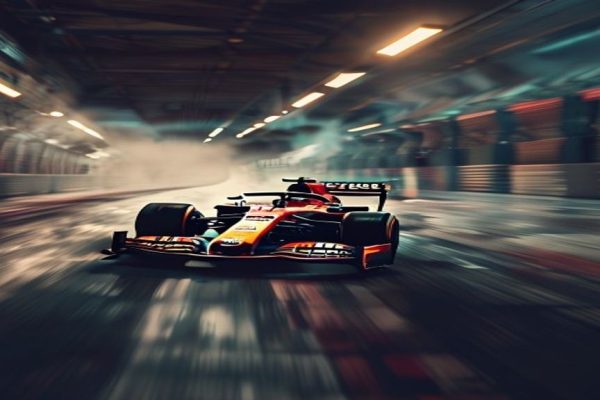
A detailed image of a Formula 1 car, with a mix of old and new design elements. The car should be shown in mid-turn, with the wheels screeching as it corners at high speed. The background should feature a blurred image of a Formula 1 track, with the grandstands and spectators blurred out. The image should convey a sense of speed, power, and technology, while also hinting at the debate surrounding F1’s new era. The car’s aerodynamics should be prominently featured, with air flowing around the wings and bodywork. The overall mood of the image should be dynamic and energetic, capturing the essence of Formula 1 as a sport that is both thrilling and technologically advanced.






Leave a Reply