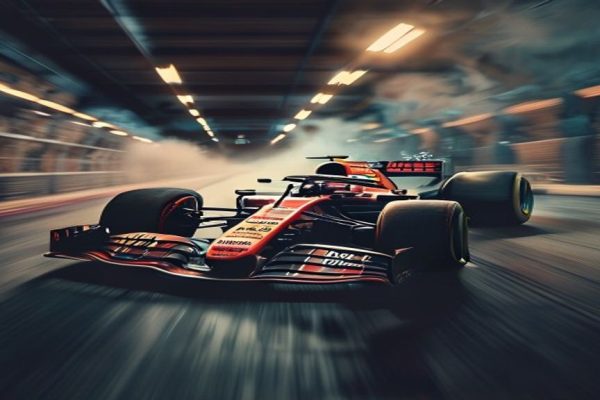
F1’s Era of High-Speed Racing: The Perfect Storm
The world of Formula 1 (F1) has been abuzz with a contentious debate that pits brains against brawn. The governing body of F1, led by FIA President Mohammed Ben Sulayem, is caught in the middle of a heated discussion that revolves around the future of the sport. The crux of the issue lies in the new car regulations introduced in 2022, which have resulted in a significant reduction in downforce. This shift has led to a more agile and unpredictable racing experience, but has also sparked concerns about the safety and sustainability of the sport.
The proponents of the new regulations argue that the current cars are more in line with the spirit of the sport’s early days, emphasizing raw power and driver skill over aerodynamic efficiency. They believe that the lack of downforce has brought the racing closer to the fans, as drivers are forced to rely on their instincts and driving prowess rather than solely relying on their car’s aerodynamic capabilities.
The Dark Side of F1: Safety Concerns Loom Large
However, the opposing camp, led by experienced drivers and team principals, is adamant that the new regulations are putting the safety of drivers at risk. They point out that the reduced downforce has led to higher cornering speeds, making the cars more susceptible to accidents. Furthermore, the increased reliance on driver skill has resulted in a higher number of near-misses and close calls, which can have devastating consequences.
The FIA has acknowledged these concerns and is working closely with the teams to address the safety issues. However, the governing body is also mindful of the need to maintain the excitement and unpredictability of the sport. The delicate balance between safety and spectacle is a recurring theme in F1, and the current debate is a testament to the ongoing evolution of the sport.
The Future of F1: What’s at Stake?
The outcome of this debate will have far-reaching implications for the future of F1. If the governing body decides to revert to the old regulations, it could result in a return to the more dominant aerodynamic cars that characterized the sport in the early 2010s. This would likely lead to a decrease in overtaking and a more processional style of racing, which could alienate fans who crave the high-speed action and unpredictability of the current cars.
On the other hand, if the FIA decides to stick with the current regulations, it could lead to a more sustainable and environmentally friendly sport. However, this would also mean that the sport would continue to prioritize excitement over safety, which could have unintended consequences in the long run.
F1’s Long-Term Future: A Shift in Paradigm?
The debate surrounding the new F1 regulations is not just about the current cars; it’s also about the long-term future of the sport. As the world grapples with the challenges of climate change and sustainability, F1 is under increasing pressure to reduce its carbon footprint. The current regulations are seen as a step in the right direction, but the governing body is being forced to weigh the benefits of sustainability against the potential costs to the sport’s popularity.
The outcome of this debate will not only determine the future of F1 but also set a precedent for other sports and industries to follow. As the world’s premier motorsport, F1 has a responsibility to showcase the best of what is possible in terms of innovation, sustainability, and excitement. The current debate is a reminder that the future of F1 is not set in stone and that the sport is constantly evolving to meet the needs of its fans, teams, and the world at large.






Leave a Reply