Tesla’s Autopilot Update: A Step Backwards for FSD on HW3?
Tesla’s Full Self-Driving (FSD) technology has been one of the most highly anticipated and discussed features in the automotive world. While the company has made significant progress in developing its autonomous driving capabilities, a recent update has left many owners of Tesla cars on Hardware 3 (HW3) with a disappointing revelation: unsupervised FSD is no longer on the horizon.
The Background on FSD and HW3
For those unfamiliar, FSD is Tesla’s advanced driver-assistance system (ADAS) designed to enable vehicles to operate autonomously without human intervention. The HW3 computer architecture, introduced in 2016, was initially intended to support the development of FSD. However, the company has faced numerous setbacks, including delays, recalls, and criticism from regulatory bodies.
The HW3 upgrade brought significant improvements to Tesla’s Autopilot system, including enhanced sensor capabilities and processing power. While it paved the way for more advanced features, such as lane-changing and traffic light recognition, it also raised expectations for FSD.
The Update: No Unsupervised FSD for HW3 Owners
A recent update from Tesla’s Chief Executive Officer, Elon Musk, has revealed that cars on HW3 will not receive unsupervised FSD. This decision has left many owners of these vehicles feeling frustrated and disappointed, as they had been counting on the feature to upgrade their driving experience.
According to Musk, the company’s focus has shifted to more practical and feasible applications of FSD, such as enabling vehicles to change lanes and make turns more autonomously. While these features are undoubtedly valuable, they fall short of the original promise of FSD.
The Implications: A Setback for FSD Development?
The decision to deny unsupervised FSD to HW3 owners has significant implications for the development of FSD as a whole. It raises questions about Tesla’s ability to deliver on its long-term promises and its willingness to adapt to changing circumstances.
The setback may also have far-reaching consequences for the automotive industry as a whole. As companies continue to invest in ADAS and FSD technologies, the lack of clear progress from Tesla may discourage other manufacturers from pursuing similar goals.
Despite the challenges, Tesla remains committed to advancing its Autopilot system. However, the update has highlighted the need for a more transparent and realistic approach to FSD development. As the industry continues to evolve, it is crucial for companies to prioritize clear communication and customer expectations.
Key Points to Consider
- Tesla cars on HW3 will not receive unsupervised FSD.
- The company’s focus has shifted to more practical applications of FSD.
- The decision raises questions about Tesla’s ability to deliver on its long-term promises.
- The setback may have far-reaching consequences for the automotive industry.
As the world waits for significant advancements in FSD, it is essential for companies to prioritize transparency, customer expectations, and realistic goals. The future of autonomous driving holds immense promise, but it requires a collective effort from industry leaders to overcome the challenges and setbacks that lie ahead.
Image Prompt:
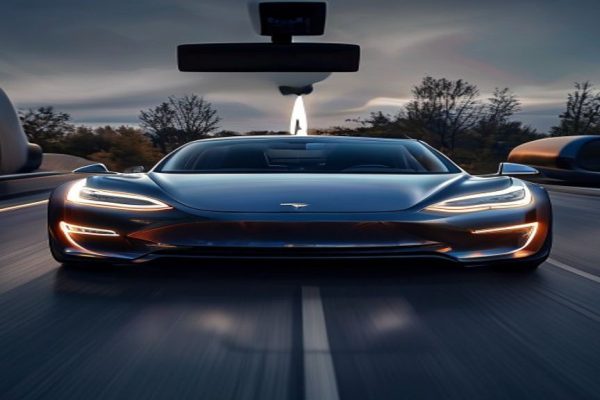
A futuristic illustration of a Tesla car driving on a highway, with a subtle Autopilot logo on the dashboard. The car is surrounded by a cityscape, with towering skyscrapers and bustling streets. In the background, a faint image of a road map or a navigation system is visible, symbolizing the car’s ability to navigate through unfamiliar territories. The overall tone of the image should be sleek, modern, and technologically advanced.






Leave a Reply