Tesla’s HW3 Full Self-Driving Delay: A Breakdown
Tesla’s Full Self-Driving (FSD) technology has been a highly anticipated feature for many owners of the electric vehicle manufacturer’s cars. However, recent updates from the company have revealed that owners with the Hardware 3 (HW3) system will not be receiving unsupervised FSD capabilities.
The Reason Behind the Delay
The delay in FSD update for HW3 owners is largely attributed to the complexity of the technology and the need for significant improvements in sensor accuracy and data processing. Tesla’s FSD system relies heavily on a combination of cameras, radar, ultrasonic sensors, and other technologies to enable autonomous driving.
However, the HW3 system, which was introduced in 2019, has been found to have some limitations in terms of sensor quality and data processing capabilities. As a result, Tesla has decided to focus on improving the HW3 system before releasing FSD capabilities for owners.
What’s Next for HW3 Owners?
While HW3 owners will not be receiving unsupervised FSD capabilities immediately, they can still expect to receive improvements in other areas, such as enhanced Autopilot features and improved safety features. Tesla has also promised to continue working on FSD updates for HW3 owners, with a focus on gradually introducing more advanced features.
In the meantime, Tesla is urging HW3 owners to be patient and to continue providing feedback on the Autopilot system. The company has also emphasized that the delay is a necessary step towards achieving more advanced autonomous driving capabilities.
Impact on the Autonomous Driving Industry
The delay in FSD update for HW3 owners has significant implications for the autonomous driving industry as a whole. While Tesla is one of the leading players in the space, other companies are also working on their own autonomous driving technologies.
The delay highlights the challenges and complexities involved in developing autonomous driving systems and the need for significant investments in research and development. It also underscores the importance of collaboration and knowledge-sharing among industry players to drive innovation and progress.
Future Implications
The delay in FSD update for HW3 owners may have future implications for Tesla’s business and revenue growth. However, the company remains committed to its vision of achieving autonomous driving capabilities and has promised to continue working towards this goal.
In the long term, the development of autonomous driving technologies has the potential to transform the transportation industry and revolutionize the way we travel. With the increasing demand for autonomous vehicles, companies like Tesla will need to continue innovating and pushing the boundaries of what is possible.
Key Takeaways
* Tesla’s HW3 Full Self-Driving (FSD) update has been delayed due to the complexity of the technology and the need for significant improvements in sensor accuracy and data processing.
* HW3 owners can still expect to receive improvements in other areas, such as enhanced Autopilot features and improved safety features.
* Tesla is urging HW3 owners to be patient and to continue providing feedback on the Autopilot system.
* The delay highlights the challenges and complexities involved in developing autonomous driving systems.
* The development of autonomous driving technologies has the potential to transform the transportation industry and revolutionize the way we travel.
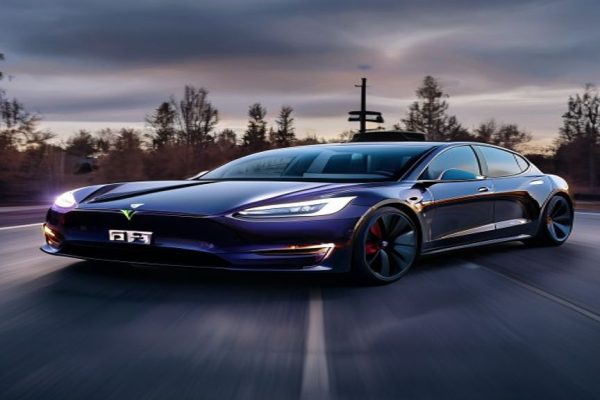
Image prompt: A Tesla car driving on the highway with a cityscape in the background, with a subtle overlay of code and sensors representing the FSD technology. The image should convey a sense of innovation and progress, while also highlighting the challenges and complexities involved in developing autonomous driving systems.






Leave a Reply