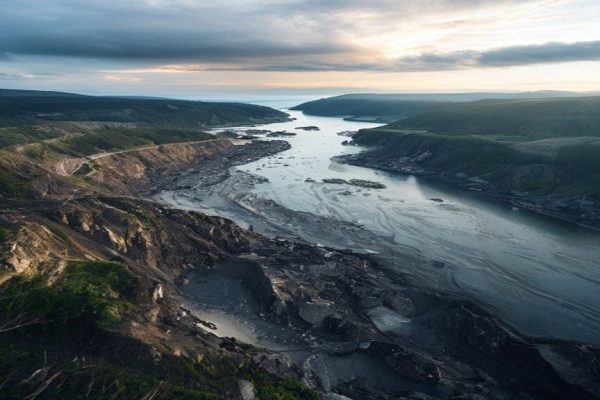
Massive Landslide Strikes Alaska’s Tracy Arm Fjord, Threatening Cruise Industry and Ecosystem
The morning of August 10, 2025, will be etched in the memories of those who witnessed the devastating landslide that struck Alaska’s Tracy Arm fjord. This natural wonder, a popular destination for many cruise lines, has been severely impacted by the catastrophic event.
The landslide, which measured 1,578 feet tall, is being hailed as one of the largest in recent history. The sheer scale of the disaster has raised concerns about the safety of cruise lines operating in the region and the potential long-term effects on the fjord’s delicate ecosystem.
Located in the Tongass National Forest, Tracy Arm fjord is a narrow, glacier-carved waterway that flows into the Inside Passage. The area is known for its breathtaking scenery, including towering cliffs, waterfalls, and majestic glaciers. However, this natural beauty comes with a price, as the fjord’s geology is inherently unstable, making it prone to landslides.
The landslide is believed to have been triggered by a combination of factors, including heavy rainfall, glacial melting, and the movement of tectonic plates. As the earth’s climate continues to change, the risk of such events is expected to increase, posing a significant threat to the region’s fragile ecosystem.
Cruise Lines and the Environment: A Delicate Balance
The Tracy Arm fjord is a critical stop for many cruise lines operating in the region. The area’s unique beauty and accessibility make it an attractive destination for tourists, generating significant revenue for local communities and economies. However, this popularity comes with a cost, as the increased human activity puts pressure on the fragile ecosystem.
The landslide has raised concerns about the safety of cruise ships operating in the area. While the immediate risk to passengers and crew is considered low, the long-term effects of the disaster are still unknown. The potential for further landslides, combined with the increased risk of oil spills and other environmental hazards, has sparked a debate about the sustainability of the cruise industry in the region.
Environmental groups are calling for a comprehensive review of the cruise industry’s impact on the Tracy Arm fjord ecosystem. They argue that the increased human activity, combined with the inherent risks associated with the fjord’s geology, makes it unsustainable for cruise lines to operate in the area.
Government Response and Future Implications
The U.S. government has pledged to provide support to affected communities and to conduct a thorough investigation into the landslide. The National Park Service, which manages the Tongass National Forest, has also issued a statement expressing concern for the safety of visitors and the long-term health of the ecosystem.
The landslide has significant implications for the future of the cruise industry in Alaska. As the world grapples with the challenges of climate change, the risks associated with operating in fragile ecosystems are becoming increasingly clear. The Tracy Arm fjord landslide serves as a stark reminder of the delicate balance between human activity and the natural world.
Key points to consider:
- The landslide was triggered by a combination of heavy rainfall, glacial melting, and tectonic plate movement.
- The Tracy Arm fjord is a critical stop for many cruise lines operating in the region, generating significant revenue for local communities and economies.
- The landslide has raised concerns about the safety of cruise ships operating in the area, with potential long-term effects on the ecosystem.
- Environmental groups are calling for a comprehensive review of the cruise industry’s impact on the Tracy Arm fjord ecosystem.
The Tracy Arm fjord landslide is a wake-up call for the cruise industry and the government to reevaluate their policies and practices in the region. As the world continues to grapple with the challenges of climate change, it is essential to prioritize the long-term health of the ecosystem and the safety of those who depend on it.






Leave a Reply