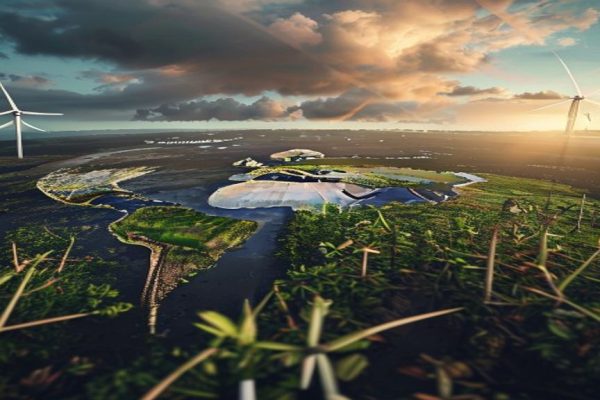
Rising Concerns Over Climate Change Impacts
The world is facing a pressing crisis, with climate change posing an existential threat to the planet. Rising temperatures, extreme weather events, and melting ice caps are just a few of the devastating consequences of our reliance on fossil fuels. As the global community grapples with the challenge of mitigating climate change, experts are emphasizing the urgent need for a rapid transition to renewable energy sources and the expansion of carbon dioxide removal technologies.
The Case for Renewable Energy
The shift to renewable energy is no longer a matter of debate; it’s an imperative. Solar and wind power, in particular, have become increasingly cost-competitive with fossil fuels, making them a viable alternative for electricity generation. Moreover, renewable energy sources offer numerous benefits, including reduced greenhouse gas emissions, improved air quality, and enhanced energy security. By transitioning to renewable energy, we can significantly reduce our carbon footprint and slow the rate of global warming.
However, the transition to renewable energy is not without its challenges. Infrastructure development, energy storage, and grid integration are just a few of the hurdles that need to be overcome. Despite these challenges, many countries are making significant strides in their renewable energy deployments. For instance, China has emerged as a global leader in solar energy, while the European Union has set ambitious targets for renewable energy deployment.
Carbon Capture and Removal Technologies
While renewable energy is essential for reducing greenhouse gas emissions, it’s not enough on its own to mitigate climate change. Carbon dioxide removal technologies (CDR) play a crucial role in this effort, as they can literally pull CO2 out of the atmosphere and store it permanently. There are several types of CDR technologies, including afforestation/reforestation, soil carbon sequestration, and direct air capture. These technologies have the potential to remove massive amounts of CO2 from the atmosphere, helping to reverse the damage already done.
However, CDR technologies are still in their infancy, and significant investment is needed to scale them up. Moreover, the cost of CDR technologies is currently high, making them less viable than renewable energy sources. Nevertheless, experts believe that CDR technologies will become increasingly important as we strive to achieve net-zero emissions.
Why Urgent Action is Needed
Climate change is a ticking time bomb, and the window for action is rapidly closing. The Intergovernmental Panel on Climate Change (IPCC) warns that we have just over a decade to limit global warming to 1.5°C above pre-industrial levels and avoid the most catastrophic consequences of climate change. To achieve this goal, we need to reduce greenhouse gas emissions by 45% by 2030 and reach net-zero emissions by 2050.
The global community must come together to address this crisis. Governments, corporations, and individuals all have a critical role to play in the transition to renewable energy and the deployment of CDR technologies. By working together, we can create a more sustainable future and ensure a livable planet for generations to come.
- Rapid transition to renewable energy is essential for mitigating climate change
- Carbon dioxide removal technologies can play a crucial role in removing massive amounts of CO2 from the atmosphere
- Urgent action is needed to limit global warming to 1.5°C above pre-industrial levels
- Global community must come together to address the climate crisis
In conclusion, the world is facing a climate crisis, and the time for action is now. By transitioning to renewable energy and deploying CDR technologies, we can reduce greenhouse gas emissions and slow the rate of global warming. The global community must work together to address this challenge and create a more sustainable future.






Leave a Reply