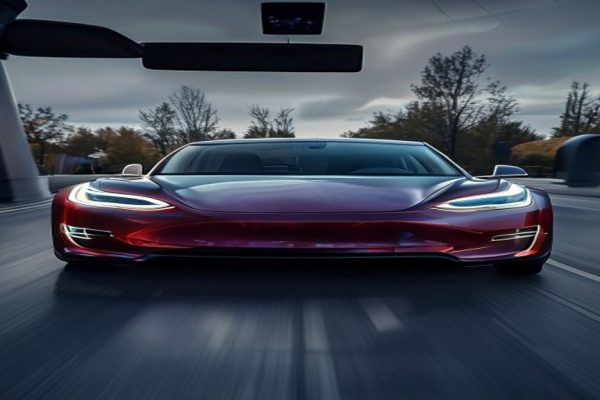
Tesla’s Autopilot Update: HW3 to Miss Unsupervised FSD, But What’s Next?
Tesla’s Full Self-Driving (FSD) technology has been a topic of interest and debate for quite some time. The company’s vision for a future where cars can drive themselves without human intervention is ambitious and has the potential to revolutionize transportation as we know it.
The HW3 Hardware Limitation
Recently, it was announced that Tesla cars equipped with Hardware 3 (HW3) will not receive the unsupervised FSD feature. This news comes as a disappointment to many Tesla enthusiasts who were eagerly awaiting the upgrade. But what does this mean, and why is it a limitation?
HW3 is the third iteration of Tesla’s hardware platform, designed to provide improved computing power and capabilities for the company’s Autopilot and FSD features. However, it appears that HW3 is not sufficient to support the unsupervised FSD feature, which requires a higher level of processing power and advanced computer vision capabilities.
What’s Next for FSD?
While the unsupervised FSD feature will not be available on HW3, Tesla is still working on the feature and plans to release it in the future. The company has not provided a specific timeline for the release, but it’s likely that it will be available on HW4, which is the next iteration of the hardware platform.
In the meantime, Tesla is focusing on improving the supervised FSD feature, which allows drivers to use the feature on highways and other designated areas, but still requires human oversight. The company is also working on expanding the feature to more roads and scenarios.
Implications for Tesla and the Industry
The delay in releasing the unsupervised FSD feature on HW3 has implications for both Tesla and the broader automotive industry. It highlights the challenges of developing and deploying autonomous driving technology and the need for continued investment in research and development.
However, it also presents an opportunity for Tesla to refine its technology and ensure that it is safe and reliable before releasing it to the public. The company’s commitment to Autopilot and FSD has already made it a leader in the industry, and this delay is unlikely to deter its loyal customer base.
In fact, Tesla’s focus on supervised FSD and its expansion to more roads and scenarios could make its technology more appealing to consumers who are looking for a more advanced and reliable Autopilot system.
Conclusion
In conclusion, the delay in releasing the unsupervised FSD feature on HW3 is a setback, but it’s not a significant one. Tesla’s commitment to Autopilot and FSD remains unwavering, and the company is working tirelessly to improve its technology. As the industry continues to evolve, it’s clear that Tesla is a leader in autonomous driving, and its technology will play a major role in shaping the future of transportation.
Whether you’re a Tesla enthusiast or just interested in the latest advancements in Autopilot and FSD, one thing is clear: the future of transportation is exciting, and it’s happening now.
Key Points:
- Tesla cars equipped with Hardware 3 (HW3) will not receive the unsupervised Full Self-Driving (FSD) feature.
- The unsupervised FSD feature requires a higher level of processing power and advanced computer vision capabilities, which HW3 does not provide.
- Tesla is still working on the unsupervised FSD feature and plans to release it in the future, likely on HW4.
- The company is focusing on improving the supervised FSD feature and expanding it to more roads and scenarios.






Leave a Reply