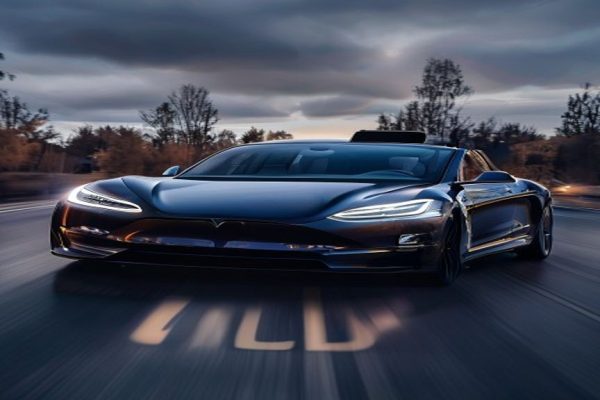
Tesla’s Full Self-Driving (FSD) Capability Delayed for HW3 Chips
Tesla has faced significant scrutiny and competition in the autonomous vehicle space. The company’s ambitious goal of making its cars fully self-driving has been a topic of discussion for years. Recently, Tesla announced a significant update regarding its Full Self-Driving (FSD) capability for cars equipped with Hardware 3 (HW3) chips.
In an article by The Verge, Tesla clarified that cars powered by the HW3 chips will not be receiving the unsupervised FSD capability. This news has left many Tesla enthusiasts and investors wondering about the implications of this decision.
Background and Context: HW3 Chips and FSD
Tesla has been working on its Full Self-Driving (FSD) capability for years, with the goal of making its cars fully autonomous. The company has made significant progress in this area, but it still faces significant challenges, including regulatory hurdles, technical complexities, and public perception.
The HW3 chips are the latest iteration of Tesla’s hardware, designed to support the company’s advanced autopilot features, including FSD. While the HW3 chips offer improved processing power and capabilities, they are not yet compatible with the unsupervised FSD capability.
Why the Delay? A Look at the Challenges Facing Tesla
The delay in rolling out unsupervised FSD capability for HW3 chips is largely due to the complexities and challenges associated with developing and deploying autonomous vehicle technology. Tesla faces significant regulatory hurdles, including compliance with safety and liability standards. The company must also address public perception and build trust with its customers.
Additionally, developing and fine-tuning the FSD algorithm requires vast amounts of data, which can be time-consuming and expensive. The delay in rolling out unsupervised FSD capability for HW3 chips may be a strategic decision by Tesla to prioritize other areas of its business, such as expanding its charging network and improving its manufacturing capabilities.
Future Implications: What This Means for Tesla and the Autonomous Vehicle Market
The delay in rolling out unsupervised FSD capability for HW3 chips has significant implications for Tesla and the autonomous vehicle market as a whole. While this news may be disappointing for some Tesla enthusiasts, it also highlights the company’s commitment to prioritizing safety and regulatory compliance.
The autonomous vehicle market is rapidly evolving, with several players vying for position. Companies like Waymo, Cruise, and Argo AI are making significant strides in this area, and Tesla must continue to innovate and improve its technology to remain competitive.
In the long term, the development and deployment of autonomous vehicle technology will have far-reaching implications for the automotive industry, transportation infrastructure, and society as a whole. Tesla’s continued investment in FSD capability will be crucial in shaping the future of transportation.
Key Takeaways
- Tesla’s HW3 chips will not support unsupervised FSD capability.
- The delay is largely due to regulatory, technical, and public perception challenges.
- Tesla’s commitment to safety and regulatory compliance is a key factor in its decision-making.
- The autonomous vehicle market is rapidly evolving, with several players vying for position.
- Tesla’s continued investment in FSD capability will be crucial in shaping the future of transportation.
Tesla’s decision to delay the roll-out of unsupervised FSD capability for HW3 chips highlights the complexities and challenges associated with developing and deploying autonomous vehicle technology. While this news may be disappointing for some, it also underscores the company’s commitment to prioritizing safety and regulatory compliance. As the autonomous vehicle market continues to evolve, Tesla must remain agile and innovative to remain competitive.
The company’s continued investment in FSD capability will be crucial in shaping the future of transportation, and its impact will be felt far beyond the automotive industry.






Leave a Reply