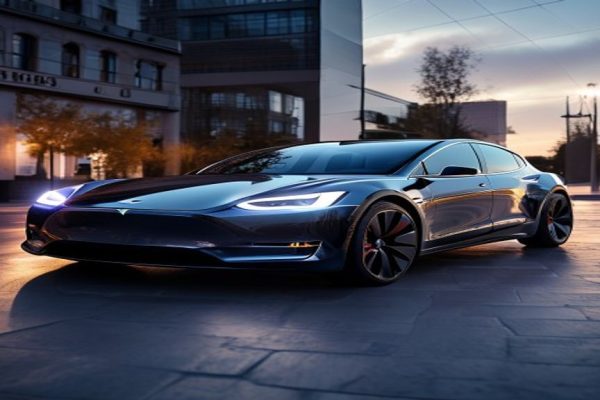
Tesla’s U-Turn on Cheaper Model: A Response to Self-Driving Challenges
The electric vehicle (EV) market is witnessing a significant shift, courtesy of Tesla’s unexpected decision to revive its plan for a budget-friendly Model 2. Initially scrapped in 2024 due to concerns over production costs, this move comes on the heels of the company’s struggling self-driving technology.
The $25,000 Model 2 was expected to make Tesla’s electric vehicles more accessible to the masses. However, the project’s cancellation was met with skepticism, as many believed it would compromise the brand’s image and profitability. Now, with self-driving capabilities facing setbacks, Tesla appears to be re-evaluating its strategy.
Self-Driving Setbacks: A Threat to Tesla’s Dominance
Tesla’s Autopilot technology, once considered a revolutionary feature, has been facing intense scrutiny in recent times. Several high-profile incidents involving Tesla’s self-driving system have raised concerns over its reliability and safety. This has led to a sharp decline in investor confidence and a corresponding impact on the company’s stock price.
The setbacks have also led to a re-evaluation of the company’s approach to self-driving technology. Tesla’s reliance on a single sensor, the camera, has been criticized for its limitations. In contrast, competitors like Waymo and Cruise have opted for a more comprehensive approach, incorporating a combination of sensors and mapping technology.
What a Cheaper Tesla Model Means for the Market
The revival of the $25,000 Model 2 has significant implications for the electric vehicle market. A more affordable Tesla would not only increase market share but also accelerate the adoption of EVs. This, in turn, could lead to a reduction in greenhouse gas emissions and a decrease in dependence on fossil fuels.
However, a cheaper Tesla Model may also lead to increased competition in the market. Other manufacturers, such as GM and Ford, have already launched affordable EV options. The introduction of a $25,000 Tesla Model would further intensify competition, making it essential for the company to balance its pricing strategy with profit margins.
Future Implications and Investor Reaction
The revival of the budget-friendly Tesla Model has sent shockwaves through the investor community. Many are speculating about the company’s future plans and the impact of the self-driving setbacks on its overall strategy. As Tesla continues to navigate this complex landscape, investors will be closely watching the company’s progress.
The success of the $25,000 Model 2 will depend on several factors, including the company’s ability to balance pricing with profitability and its capacity to address the challenges associated with self-driving technology. If Tesla can successfully execute this plan, it would not only reinforce its position in the market but also set a new benchmark for the electric vehicle industry.
However, if the company fails to deliver, it could have far-reaching consequences for the electric vehicle market and the future of autonomous driving. One thing is certain: the revival of the budget-friendly Tesla Model has sparked a new era of competition in the EV market, and only time will tell how this story unfolds.
Key Points:
- Tesla has revived its plan for a $25,000 Model 2, initially scrapped in 2024.
- The decision comes on the heels of self-driving setbacks and declining investor confidence.
- A cheaper Tesla Model would increase market share and accelerate EV adoption.
- However, it would also lead to increased competition in the market and a need for Tesla to balance pricing with profitability.
Image Prompt: A futuristic illustration of a Tesla Model 2 driving on a highway, with a cityscape in the background. The car is shown with a sleek, aerodynamic design, and its self-driving technology is depicted through a series of glowing blue lines and circles.






Leave a Reply