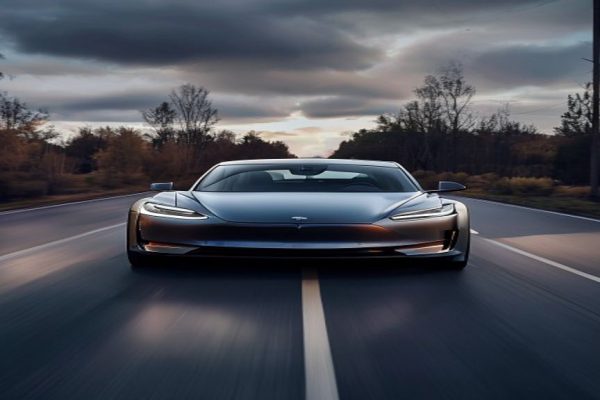
Tesla’s Ambitious FSD Project: A Roadmap to Autonomous Driving
The world of electric vehicles (EVs) has been witnessing a rapid transformation in recent years, with companies like Tesla at the forefront of innovation. One of the most significant aspects of this transformation is the development of autonomous driving technology, commonly referred to as Full Self-Driving (FSD). Tesla has been working tirelessly to make its FSD feature a reality, with the ultimate goal of enabling its vehicles to drive without human intervention. However, a recent update has left many owners of Tesla cars on Hardware (HW) 3 confused and frustrated.
What is Full Self-Driving (FSD)?
FSD is an advanced driver-assistance system (ADAS) developed by Tesla that enables vehicles to navigate through various road conditions with minimal human input. The system uses a combination of cameras, ultrasonic sensors, and radar to detect and respond to its surroundings. Tesla’s FSD is designed to be a Level 5 autonomous driving system, which means it can operate without human intervention in most situations. However, the company has been clear that FSD is not a Level 5 system in the classical sense, and it requires human oversight for complex situations.
The HW3 Conundrum: Why FSD Updates Are Delayed
Tesla cars on HW3, the third generation of the company’s hardware suite, have been eagerly awaiting the FSD update. However, a recent statement from Tesla has indicated that these vehicles will not receive unsupervised FSD. The reason behind this decision lies in the limitations of the HW3 hardware. While HW3 provides a significant upgrade over its predecessors, it still lacks the processing power and sensor suite required to support Level 5 autonomy.
- The HW3 hardware lacks a dedicated computer for processing sensor data, which is a critical component of FSD.
- The HW3 suite also lacks the advanced sensor suite required for FSD, including a high-resolution camera and a longer-range radar.
- The limitations of HW3 have forced Tesla to prioritize the development of its more advanced hardware suites, such as HW4, which are better equipped to handle the complexities of FSD.
The Future of FSD: What to Expect
While the news may come as a disappointment to HW3 owners, Tesla has been clear about its commitment to FSD. The company has announced plans to introduce FSD on its more advanced hardware suites, starting with HW4. This upgrade is expected to provide a significant boost in processing power and sensor capabilities, enabling more advanced autonomous driving features. Tesla has also hinted at the possibility of introducing FSD on HW3 in the future, although this is likely to be a more complex and resource-intensive process.
The development of FSD is a complex and ongoing process that requires significant investment in research and development. While the delay may be frustrating for some, it is essential to remember that Tesla is pushing the boundaries of what is possible in the field of autonomous driving. The company’s commitment to FSD demonstrates its dedication to making transportation safer and more efficient for all.






Leave a Reply