Tesla HW3 Owners Left Disappointed: No Unsynchronized Full Self-Driving Capability
In a recent decision that has left Tesla HW3 owners disappointed, the electric vehicle manufacturer has announced that vehicles equipped with the Hardware 3 (HW3) computer will not be getting unsupervised Full Self-Driving (FSD) capability. This move has sparked a mix of emotions, ranging from frustration to understanding, among Tesla enthusiasts.
Background and Context
Tesla’s Full Self-Driving technology, currently in beta, aims to provide a level of autonomy that enables vehicles to navigate through complex scenarios without human intervention. However, the company has consistently stated that the technology is not yet ready for widespread deployment, particularly in situations where the driver is not paying attention.
The HW3 computer, introduced in 2021, was designed to support FSD, but it appears that Tesla is taking a more cautious approach to implementing the technology. The company has been refining its Autopilot and FSD systems, but the pace of development has been slower than expected.
Reasons Behind the Decision
While Tesla has not provided an official explanation for the decision, industry experts speculate that the company is prioritizing safety and regulatory compliance. The lack of unsupervised FSD capability on HW3 vehicles may be a deliberate choice to avoid potential liability issues and to ensure that drivers remain engaged and attentive while driving.
Another possible reason is the complexity of implementing FSD in a wide range of scenarios. Tesla has been working on improving its computer vision and machine learning algorithms, but the technology is still not mature enough to handle edge cases and unexpected situations.
Future Implications and Expectations
The decision to withhold unsupervised FSD capability from HW3 vehicles has significant implications for Tesla owners and the broader industry. It highlights the challenges of developing and deploying autonomous driving technology, particularly in a complex and rapidly evolving regulatory environment.
While some owners may be disappointed by the decision, others may appreciate the company’s cautious approach to safety and regulatory compliance. Tesla has a reputation for pushing the boundaries of innovation, and this decision may be a reflection of the company’s commitment to prioritizing safety above all else.
In the near term, Tesla owners can expect to see continued refinement of the Autopilot and FSD systems, with a focus on improving safety and functionality. The company has promised to make FSD available to a wider range of vehicles in the future, but the timeline for this remains uncertain.
As the industry continues to evolve, one thing is clear: the development of autonomous driving technology is a complex and challenging task that requires careful consideration of safety, regulatory compliance, and public acceptance.
Key Takeaways
- Tesla HW3 vehicles will not be getting unsupervised Full Self-Driving capability.
- The decision is likely driven by a focus on safety and regulatory compliance.
- The company is prioritizing the development of more advanced and refined Autopilot and FSD systems.
- The timeline for making FSD available to a wider range of vehicles remains uncertain.
As the world waits with bated breath for the next breakthrough in autonomous driving technology, one thing is clear: Tesla’s decision to withhold unsupervised FSD capability from HW3 vehicles is a reflection of the company’s commitment to safety and innovation.
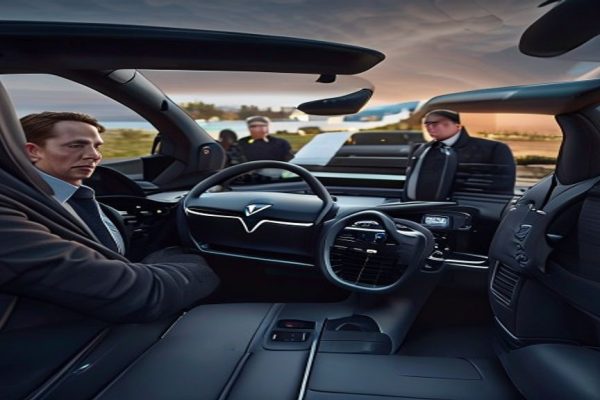
Image Prompt:
A futuristic illustration of a Tesla HW3 vehicle navigating through a complex urban environment, with a subtle hint of a driver’s hands on the wheel, symbolizing the company’s focus on safety and human oversight in the development of autonomous driving technology.






Leave a Reply