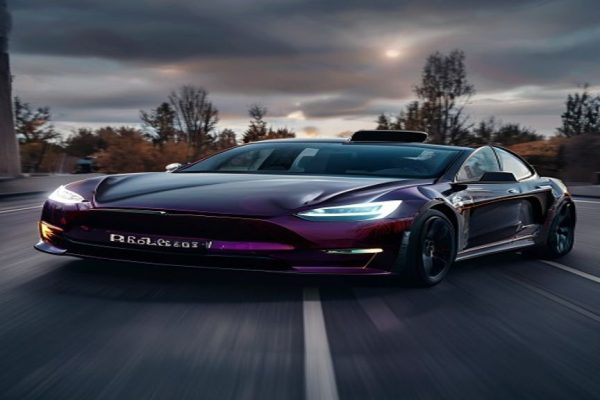
Tesla’s Full Self-Driving (FSD) Update: A Major Disappointment for HW3 Owners
The news has sparked widespread disappointment among Tesla owners who have been eagerly awaiting the latest update for Full Self-Driving (FSD) technology in their vehicles. According to a recent announcement, Tesla cars on Hardware 3 (HW3) will not be receiving unsupervised FSD, a major letdown for those who have been relying on this feature for convenience and peace of mind on the roads.
What is Hardware 3 (HW3)?
For those unfamiliar, Hardware 3 (HW3) is the third generation of Tesla’s onboard computer hardware. This advanced system is designed to support a wide range of features, including Autopilot, Enhanced Autopilot, and Full Self-Driving (FSD).HW3 boasts significant improvements over its predecessor, HW2, offering faster processing, more memory, and enhanced sensor capabilities.
Why the Delay in FSD Update?
So, why the delay in releasing unsupervised FSD for HW3 owners? The answer lies in the complexities of developing and refining autonomous driving technology. Tesla’s FSD update requires a vast amount of data, meticulous testing, and validation to ensure that it meets the company’s high standards for safety and performance.
Elon Musk, Tesla’s CEO, has been vocal about the challenges of developing FSD, emphasizing the need for robust testing and validation to prevent accidents and ensure a seamless user experience. The delay in FSD update for HW3 owners is a testament to Tesla’s commitment to safety and its refusal to compromise on the quality of its autonomous driving technology.
What Does This Mean for HW3 Owners?
For HW3 owners, the lack of unsupervised FSD update may be a setback, but it’s not a deal-breaker. They can still enjoy the benefits of Autopilot and Enhanced Autopilot, which are already available on HW3-equipped vehicles. Moreover, Tesla is continuously working on improving its FSD technology, and owners can expect future updates to bring them closer to achieving true autonomy.
However, the delay in FSD update raises questions about the timeline for achieving Level 5 autonomy, a milestone that represents a vehicle’s ability to operate without human intervention in all situations. Tesla’s competitors, such as Waymo and Cruise, have been making significant strides in this area, and the pressure is on for Tesla to catch up.
What Can We Expect in the Future?
So, what can we expect in the future? Tesla has been working on refining its FSD technology, and we can expect future updates to bring significant improvements in safety, performance, and convenience. The company has announced plans to introduce a new version of its FSD software, which will be designed to work seamlessly with HW3-equipped vehicles.
The future of autonomous driving is uncertain, but one thing is clear: Tesla is committed to pushing the boundaries of what’s possible with its FSD technology. As the company continues to refine its approach, we can expect to see significant advancements in the coming years.
Conclusion
The delay in FSD update for HW3 owners may be a setback, but it’s not a reflection of Tesla’s commitment to autonomous driving technology. The company is working tirelessly to refine its FSD software, and we can expect future updates to bring significant improvements in safety, performance, and convenience. As we move forward, one thing is clear: Tesla is at the forefront of a revolution that’s set to change the way we travel forever.
- Tesla’s FSD update for HW3 owners has been delayed, with unsupervised FSD not being available at this time.
- The delay is due to the complexities of developing and refining autonomous driving technology.
- HW3 owners can still enjoy the benefits of Autopilot and Enhanced Autopilot.
- Tesla is committed to pushing the boundaries of what’s possible with its FSD technology.
- The future of autonomous driving is uncertain, but one thing is clear: Tesla is at the forefront of a revolution that’s set to change the way we travel forever.






Leave a Reply