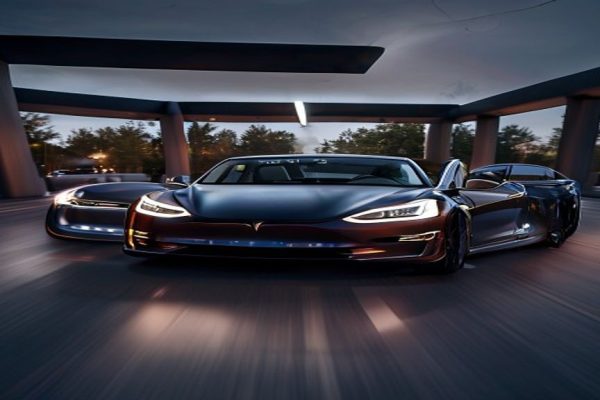
Tesla’s Full Self-Driving (FSD) Update Plans Spark Debate
The recent announcement by Tesla regarding their Full Self-Driving (FSD) update plans has sparked a heated debate among car enthusiasts and owners. The electric vehicle (EV) giant revealed that cars equipped with Hardware 3 (HW3) will not receive unsupervised FSD capabilities.
This decision has left many HW3 owners feeling frustrated and disappointed, as they were expecting to enjoy the same level of autonomy as those with HW4. The HW3 platform, which was introduced in 2020, was designed to provide advanced driver-assistance systems (ADAS) and improve the overall driving experience.
Background and Context
Tesla’s FSD technology is a complex system that relies on a combination of sensors, cameras, and machine learning algorithms to enable autonomous driving. The company has been working on refining this technology for several years, with the goal of making it available to a wider range of customers.
However, the development of FSD has been marked by several setbacks, including a high-profile accident in 2021 that raised concerns about the technology’s safety and reliability. As a result, Tesla has been cautious in deploying FSD capabilities, opting to start with supervised testing and gradually expand to unsupervised modes.
Reasons Behind the Decision
The decision to exclude HW3 owners from unsupervised FSD capabilities is likely due to several factors, including:
- Hardware limitations: HW3 may not have the necessary processing power or sensor suite to support unsupervised FSD.
- Software limitations: Tesla may not have completed the necessary software development to enable unsupervised FSD on HW3.
- Safety concerns: Tesla may be prioritizing safety and avoiding the potential risks associated with unsupervised FSD on HW3.
It’s worth noting that HW3 owners will still be able to enjoy advanced driver-assistance systems (ADAS) and other features, such as Autopilot and Enhanced Autopilot.
Future Implications
The implications of this decision are far-reaching, with potential consequences for both HW3 owners and the broader EV market. Some possible outcomes include:
- HW3 owners may feel forced to upgrade to HW4 to access unsupervised FSD capabilities, which could lead to increased sales of HW4-equipped vehicles.
- The decision may impact Tesla’s reputation and credibility, particularly among early adopters who invested in HW3.
- The move may also set a precedent for other EV manufacturers, who may need to reevaluate their own FSD strategies and hardware requirements.
As the debate continues to unfold, one thing is clear: the future of autonomous driving is complex and multifaceted, with many factors influencing the pace and scope of its development.
Tesla’s decision to exclude HW3 owners from unsupervised FSD capabilities may be a setback for some, but it also highlights the company’s commitment to prioritizing safety and pushing the boundaries of what is possible with FSD technology.






Leave a Reply