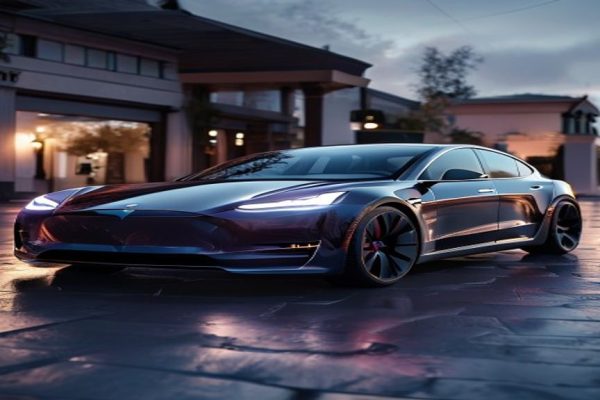
Tesla’s Cheaper Model Revival: A Sign of Adapting to Changing Market Trends?
In 2024, Elon Musk cancelled Tesla’s plans to build a $25,000 Model 2, citing the company’s focus on more advanced and expensive models. However, with the recent setbacks in Tesla’s self-driving technology, the electric vehicle (EV) market is witnessing a shift in consumer preferences, and a cheaper Tesla may be making a comeback.
As the global EV market continues to grow, with many established automakers and new entrants vying for market share, Tesla faces increased competition. The company’s decision to revive the cheaper Model 2 could be a strategic move to regain its market share and appeal to a wider audience.
Challenges in Self-Driving Technology
Tesla’s self-driving technology has been a crucial aspect of its business strategy, aiming to provide a fully autonomous driving experience to its customers. However, recent setbacks and accidents involving Tesla’s Autopilot system have raised concerns about the technology’s reliability and safety.
The failure of Tesla’s self-driving technology to meet expectations has led to a re-evaluation of the company’s priorities. In light of this, the decision to revive the cheaper Model 2 could be a sign of adapting to changing market trends and consumer preferences.
A Cheaper Tesla: What Does it Mean for the Market?
- The revival of the cheaper Model 2 could help Tesla regain its market share in the EV segment.
- A more affordable Tesla could appeal to a wider audience, including those who may not have been able to afford the company’s higher-end models.
- The move could also put pressure on other automakers to follow suit, potentially leading to a price war in the EV market.
- The decision may also be seen as a compromise between Tesla’s commitment to innovation and the need to appeal to a broader customer base.
As the EV market continues to evolve, Tesla’s decision to revive the cheaper Model 2 could be a significant development. The move could have far-reaching implications for the company’s future growth and the overall market landscape.
While the revival of the cheaper Model 2 may not be a direct response to the setbacks in Tesla’s self-driving technology, it could be a strategic move to adapt to changing market trends and consumer preferences. As the company continues to navigate the complexities of the EV market, one thing is certain – a cheaper Tesla could be a game-changer in the industry.
Future Implications and Possibilities
The decision to revive the cheaper Model 2 could have several future implications and possibilities for Tesla and the EV market as a whole. Some potential outcomes include:
• Increased competition in the EV market, potentially leading to a price war and lower prices for consumers.
• A shift in Tesla’s focus towards more affordable models, potentially at the expense of its more advanced and expensive offerings.
• A change in consumer behavior, with a greater emphasis on affordability and practicality in the EV market.
As the EV market continues to evolve, Tesla’s decision to revive the cheaper Model 2 will be closely watched by industry observers and analysts. The move could be a significant development in the company’s growth and the future of the EV market.
Only time will tell if the revival of the cheaper Model 2 is a game-changer for Tesla and the EV market. One thing is certain, however – the decision has the potential to shake up the industry and set a new course for the future of electric vehicles.
At this point, it is essential for Tesla to carefully consider the production costs, market demand, and technological feasibility of the cheaper Model 2. The success of this model will depend on several factors, including the company’s ability to balance innovation with affordability, and its capacity to meet the changing needs and preferences of its customers.
As the EV market continues to evolve, one thing is clear – Tesla’s decision to revive the cheaper Model 2 has the potential to be a significant development in the industry. Only time will tell if it will be a game-changer or a misstep.
For now, the focus remains on Tesla’s ability to execute its plans and deliver a product that meets the needs and expectations of its customers. The outcome will be closely watched by industry observers and analysts, and will have significant implications for the future of the EV market.






Leave a Reply