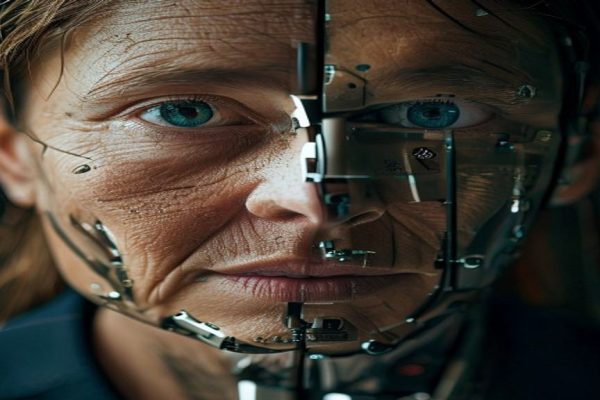
Expert Insights on Human-AI Interactions
Julie Carpenter, a seasoned human-AI interaction expert and author of The Naked Android, has shed light on the phenomenon of human users attributing human-like qualities to chatbots. Carpenter’s views offer a nuanced perspective on the intersection of human and artificial intelligence.
Anthropomorphism, the tendency to attribute human characteristics to non-human entities, is a common occurrence in human-AI interactions. Carpenter emphasizes that this phenomenon is not solely the result of user error or misunderstanding. Instead, she suggests that generative AI tools, such as ChatGPT, are designed to engage users in a way that blurs the lines between human and machine.
Designing AI for Human Engagement
Carpenter notes that the development of chatbots and other AI tools is driven by the pursuit of user experience and engagement. By incorporating elements of human-like conversation, such as context understanding and emotional intelligence, AI systems can create a sense of connection with users.
This design approach, while intended to enhance user experience, can also contribute to the anthropomorphism phenomenon. As users interact with AI systems, they begin to attribute human-like qualities to the technology, often unconsciously.
Key Points:
- Generative AI tools, like ChatGPT, are designed to engage users in a way that blurs the lines between human and machine.
- The development of chatbots and other AI tools is driven by the pursuit of user experience and engagement.
- Anthropomorphism can occur when users attribute human-like qualities to AI systems.
Future Implications of Human-AI Interactions
As human-AI interactions continue to evolve, it is essential to consider the implications of anthropomorphism on our understanding of AI and its potential applications. Carpenter suggests that a more nuanced understanding of human-AI interactions can help us navigate the complexities of AI development and deployment.
By acknowledging the role of design in shaping user experiences and perceptions, we can work towards creating more informed and responsible AI systems that prioritize transparency and accountability.
Carpenter’s expert insights offer a timely reminder of the need for a more critical and informed approach to human-AI interactions. As we continue to navigate the intersection of human and artificial intelligence, it is essential to prioritize a nuanced understanding of the complex relationships between humans, machines, and design.
Ultimately, Carpenter’s work serves as a call to action for developers, designers, and users to work together towards creating a more informed and responsible AI landscape.
Image Prompt: An AI-generated image of a person interacting with a chatbot on a computer screen, with blurred lines between the human and machine elements.






Leave a Reply