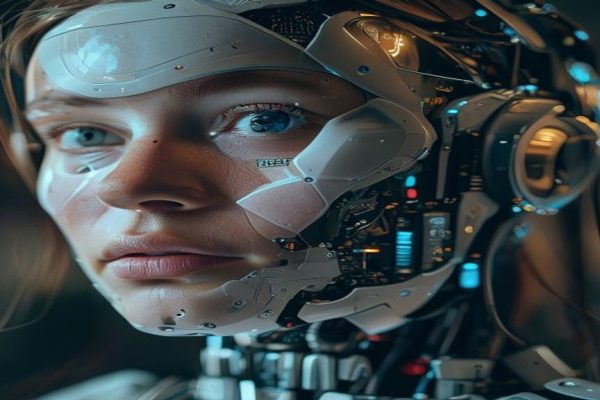
The Rise of Generative AI and the Blurred Lines of Reality
Julie Carpenter, a renowned expert in human-AI interaction, has shed light on a fascinating phenomenon: the tendency for humans to attribute human-like qualities to chatbots and other artificial intelligence tools. In a recent interview, Carpenter, author of The Naked Android, emphasized that this anthropomorphism is not solely the result of user error, but rather a natural byproduct of how our brains process and interact with technology.
Carpenter’s insights come at a time when generative AI tools, such as ChatGPT, are increasingly integrated into our daily lives. From virtual assistants and customer service chatbots to advanced language translation software, AI has become an integral part of modern communication. However, as we increasingly rely on these tools, we begin to notice a peculiar trend: we start seeing human traits in them.
Take, for instance, the popular AI chatbot, ChatGPT. Designed to simulate human-like conversations, ChatGPT has gained widespread attention for its ability to engage in coherent and even witty discussions. Users often share their conversations with ChatGPT on social media, marveling at its perceived intelligence and creativity. But what lies behind this fascination?
According to Carpenter, our brains are wired to recognize patterns and assign meaning to the world around us. When we interact with AI tools, our minds attempt to make sense of the information being processed and responded to in real-time. This cognitive process leads us to attribute human-like characteristics, such as emotions, motivations, and even personalities, to the AI system.
The Psychology Behind AI Anthromorphism
Carpenter explains that this phenomenon is rooted in our fundamental desire to connect with others. As humans, we are social creatures that thrive on relationships and empathy. When we encounter AI tools that mimic human-like interactions, our brains respond by attempting to establish a connection. This can lead to a range of emotions, from excitement and curiosity to frustration and disappointment.
Furthermore, Carpenter points out that our perception of AI is often influenced by our own experiences and biases. We tend to project our own emotions, values, and expectations onto the AI system, which can lead to a distorted view of its capabilities and limitations.
This anthropomorphism has significant implications for the development and deployment of AI tools. As we design and interact with AI systems, we must be aware of the potential for users to attribute human-like qualities to them. This can impact the way we program, train, and evaluate AI, as well as how we communicate its capabilities and limitations to users.
The Future of AI: Balancing Humanization and Reality
As AI continues to advance and become increasingly integrated into our lives, it is essential to strike a balance between humanization and reality. While AI tools can provide immense value and convenience, we must not forget that they are, ultimately, machines.
Carpenter emphasizes the importance of transparency and clarity in AI design and communication. By acknowledging the limitations and capabilities of AI tools, we can work towards creating systems that are both effective and user-friendly.
In conclusion, Julie Carpenter’s insights offer a fascinating glimpse into the psychology behind AI anthromorphism. As we navigate the rapidly evolving landscape of AI, it is crucial to recognize the blurred lines between reality and fantasy. By understanding the underlying cognitive processes and biases that drive our interactions with AI, we can develop more effective and responsible AI tools that truly enhance our lives.
- Awareness of the potential for AI anthromorphism is essential for the development and deployment of AI tools.
- Transparency and clarity in AI design and communication are critical for striking a balance between humanization and reality.
- The future of AI requires a nuanced understanding of the cognitive processes and biases that drive human-AI interactions.
Image Prompt: An AI-generated image of a person interacting with a chatbot on a computer screen. The chatbot’s interface is designed to resemble a human face, with a smiling expression and subtle animations. In the background, a blurred image of a cityscape or a futuristic landscape represents the vast possibilities and implications of AI in our daily lives.






Leave a Reply