Historic Development in Aviation
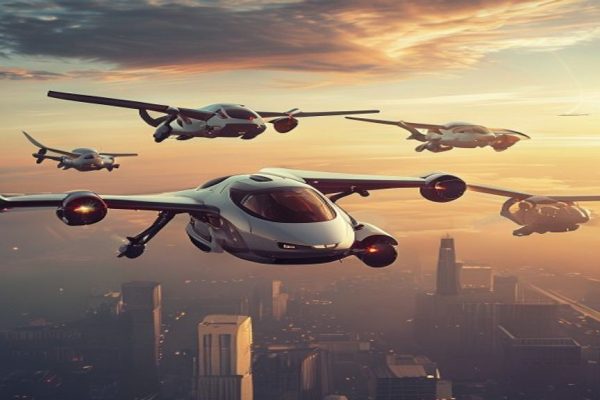
The United States is on the cusp of a revolutionary change in aviation, with the first flying cars set to enter US airspace as early as June. These new aircraft, resembling flying cars that can take off and land vertically, like helicopters, but function like planes, have been under development for years. The US Department of Transportation has announced that it will begin issuing permits to companies operating these vehicles, paving the way for commercial use.
Background and Development
The concept of flying cars has been around for decades, with various prototypes and experimental models being developed over the years. However, the recent advancements in technology and the growing demand for sustainable and efficient transportation have accelerated the development of these vehicles. Companies like Uber, Lilium, and Joby Aviation are at the forefront of this revolution, investing heavily in research and development to bring these vehicles to market.
The new flying cars will be equipped with advanced safety features, including redundant systems, multiple redundancies, and advanced navigation and control systems. They will also be designed to operate in a variety of environments, from urban to rural areas, and will be capable of carrying multiple passengers.
Concerns and Hopes
- Concerns over safety: The introduction of flying cars raises concerns over safety, particularly in densely populated areas. There is a risk of accidents, noise pollution, and disruption to existing air traffic.
- Environmental impact: The use of flying cars could lead to an increase in greenhouse gas emissions, contributing to climate change.
- Regulatory framework: The US government will need to establish a robust regulatory framework to oversee the operation of flying cars, ensuring that they are used safely and responsibly.
- Economic benefits: The development of flying cars could create new jobs and stimulate economic growth, particularly in the aviation and transportation sectors.
- Increased accessibility: Flying cars could provide increased accessibility to remote areas, improving connectivity and reducing travel time.
While there are concerns about the safety and environmental impact of flying cars, many experts believe that they have the potential to revolutionize the way we travel. With the right regulatory framework in place, flying cars could become a sustainable and efficient mode of transportation, reducing congestion on roads and improving air quality.
Future Implications
The introduction of flying cars will have far-reaching implications for the aviation industry, transportation systems, and urban planning. Cities will need to adapt to accommodate the new mode of transportation, with changes to infrastructure, regulations, and public policy.
The success of flying cars will also depend on public acceptance and education. As with any new technology, there will be a learning curve, and it will be essential to educate the public about the benefits and risks associated with flying cars.
In conclusion, the introduction of flying cars in the US is a significant development that has the potential to revolutionize the way we travel. While there are concerns and challenges associated with this new technology, many experts believe that it has the potential to improve our lives and the environment. As the industry continues to evolve, it will be essential to balance innovation with caution, ensuring that flying cars are used safely and responsibly.
Image prompt: A futuristic illustration of a flying car taking off from a rooftop in a densely populated city, with a blue sky and fluffy white clouds in the background. The flying car is sleek and modern, with a silver and gray color scheme. In the foreground, people are walking and driving on the streets, with a mix of traditional cars and bicycles. The image should convey a sense of excitement, innovation, and possibility.
Category: Technology






Leave a Reply