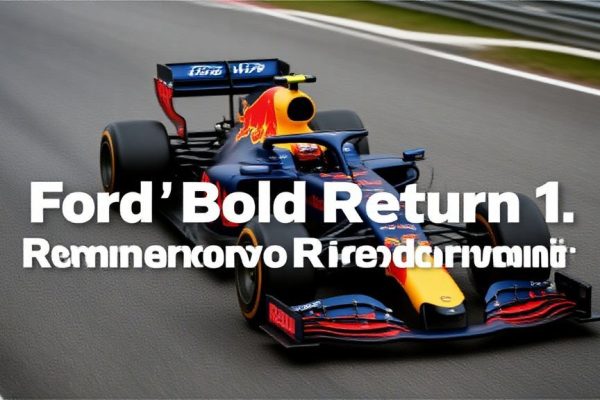
Ford’s Bold Return to Formula 1: Lessons from Red Bull Engine Development
Ford, one of the world’s leading automotive manufacturers, is set to reenter the high-stakes world of Formula 1 (F1) racing. This significant move marks a departure from the company’s previous absence from the sport since 2004. The announcement has sent shockwaves throughout the F1 community, with many speculating about the reasoning behind Ford’s decision and what this means for the future of the sport.
The Red Bull Connection
The connection to Red Bull is a crucial aspect of Ford’s reentry into F1. In 2022, it was revealed that Ford would be developing the power unit for the Red Bull Racing team. This partnership provided valuable experience and insight into the world of F1 engine development, which has ultimately informed Ford’s decision to reenter the sport.
Jim Farley, Ford’s CEO, has stated that developing the Red Bull engine taught him a valuable lesson about the importance of speed and agility in the software game. This comment suggests that Ford’s reentry into F1 is not just about competing on the track but also about leveraging the technological expertise gained from the partnership to improve its software development capabilities.
The Benefits of Reentering F1
So, what does Ford hope to achieve by reentering F1? The benefits are numerous, and the company has likely weighed the potential rewards against the costs. Here are a few key advantages:
- Technological Innovation: F1 is a platform for cutting-edge innovation, pushing the boundaries of engineering and design. Ford can leverage this expertise to inform its own product development, particularly in the areas of electric and autonomous vehicles.
- Branding and Marketing: A successful F1 team can provide a significant boost to Ford’s brand image and marketing efforts, attracting a new and younger audience to its products.
- Racing and Engineering Talent: The F1 paddock is home to some of the world’s most talented engineers and racing drivers. Ford can tap into this pool of expertise to improve its own racing and engineering capabilities.
The Future of F1: What’s Next?
Ford’s reentry into F1 raises several questions about the future of the sport. Will other manufacturers follow suit, or will Ford’s move be a one-off? How will the company’s partnership with Red Bull impact the competitive balance of the sport? These are just a few of the many questions that will be answered in the coming months and years.
One thing is certain, however: Ford’s bold move has added a new layer of excitement and intrigue to the world of F1. As the sport continues to evolve and adapt, it will be fascinating to see how Ford’s reentry shapes the future of Formula 1.
Key Takeaways
- Ford is reentering Formula 1 racing after a 17-year absence.
- The company has developed the power unit for the Red Bull Racing team.
- Jim Farley has stated that developing the Red Bull engine taught him valuable lessons about speed and agility in software development.
- Ford hopes to leverage the technological expertise gained from F1 to improve its product development, particularly in electric and autonomous vehicles.
- The company’s reentry into F1 could have significant implications for the sport’s competitive balance and future direction.
As the F1 season heats up, one thing is clear: Ford’s bold return to the sport is a major story that will be closely followed by racing fans and industry insiders alike.






Leave a Reply