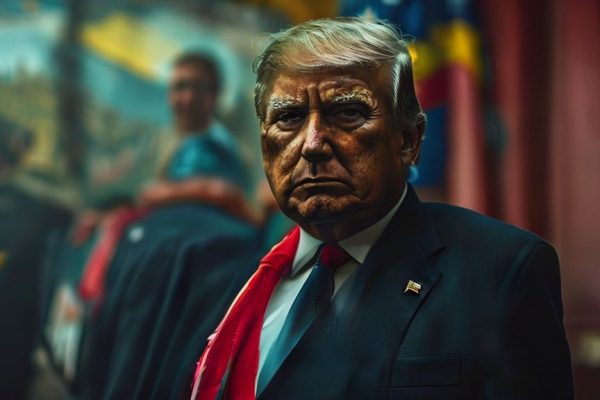
The Rise of a New Global Order
The capture of Venezuela’s Nicolás Maduro by Donald Trump’s administration has sent shockwaves around the world, leaving many to wonder if this marks the beginning of a new era in global politics. For over a year, the international community has been grappling with the implications of this shift, and it’s time to take a closer look at what’s driving it and where it might lead.
A New Era of Great Power Politics
The old bipolar world order, dominated by the United States and the Soviet Union, has given way to a multipolar system where several countries, including China, India, and the European Union, are vying for influence. This shift has created a more complex and unpredictable global landscape, where the lines between friend and foe are increasingly blurred.
At the heart of this transformation is the rise of China, which has emerged as a major economic and military power. Beijing’s Belt and Road Initiative (BRI) has created a vast network of trade and infrastructure links across Asia, Africa, and Europe, challenging the traditional dominance of the US and its allies.
The Role of Unconventional Diplomacy
Donald Trump’s capture of Nicolás Maduro is seen by many as a bold move in the use of unconventional diplomacy. By targeting a key leader, Trump’s administration has sent a powerful message to other nations that it will not hesitate to take action against those who challenge its interests.
This approach has both supporters and critics. Some see it as a necessary response to the growing challenges posed by authoritarian regimes and terrorist organizations. Others argue that it undermines the rule of law and sets a dangerous precedent for other nations to follow.
The Future of Global Governance
The shift in international politics raises fundamental questions about the future of global governance. As the old certainties crumble, new institutions and frameworks are needed to manage the complex web of relationships between nations.
The United Nations, once seen as the epitome of international cooperation, has struggled to adapt to the changing global landscape. The rise of regional organizations, such as the African Union and the Association of Southeast Asian Nations (ASEAN), may offer a more effective way to address regional challenges.
As the world navigates this new era of great power politics, one thing is clear: the old rules no longer apply. The capture of Nicolás Maduro is just one symptom of a deeper transformation that will require nations to rethink their strategies and adapt to a rapidly changing world.
Key points to consider:
- The shift in international politics marks a new era of great power politics.
- China’s rise has created a more complex and unpredictable global landscape.
- Unconventional diplomacy, exemplified by Trump’s capture of Nicolás Maduro, is becoming increasingly common.
- The future of global governance is uncertain, with new institutions and frameworks needed to manage the complex web of relationships between nations.
The implications of this shift are far-reaching and will require nations to rethink their strategies and adapt to a rapidly changing world. As the old certainties crumble, one thing is clear: the world is entering a new era of global politics, where the rules of the game are being rewritten.






Leave a Reply