Tesla’s Breakthrough in Autonomous Technology
Tesla, the pioneering electric vehicle manufacturer, has made a significant stride in its quest for autonomous driving technology. The company’s unsupervised robotaxis have hit the road, marking a major milestone in the development of self-driving cars. While this achievement is a testament to Elon Musk’s vision for the future of transportation, there are still many questions surrounding the immediate implications and accessibility of these robotaxis.
How Does This Technology Work?
Tesla’s unsupervised robotaxis rely on a sophisticated network of sensors, cameras, and software that enable the vehicle to navigate and respond to various driving scenarios without human intervention. This technology has been in development for several years, with Tesla’s engineers working tirelessly to refine and perfect the system. The company has stated that its robotaxis will be capable of handling a wide range of situations, from heavy traffic to complex intersections.
The Challenges Ahead
While Tesla’s breakthrough in autonomous technology is a significant achievement, there are still many challenges that need to be addressed before unsupervised robotaxis become a reality for the masses. One of the primary concerns is the issue of public trust. Many people are hesitant to rely on self-driving cars, citing concerns about safety and liability. Additionally, there are regulatory hurdles that need to be overcome before unsupervised robotaxis can be deployed on a large scale.
Furthermore, there are also technical challenges that need to be addressed. Ensuring that the robotaxis can accurately detect and respond to various driving scenarios, including pedestrians, cyclists, and other vehicles, is a complex task. Moreover, the system needs to be able to adapt to different weather conditions, road types, and other environmental factors.
The Future of Transportation
The development of unsupervised robotaxis has the potential to revolutionize the transportation industry. Imagine a future where you can summon a self-driving car with the touch of a button, and it takes you to your destination without the need for human intervention. This could greatly reduce traffic congestion, improve air quality, and increase mobility for the elderly and disabled.
However, this future is still in the early stages of development. Tesla’s unsupervised robotaxis are not yet available to the general public, and it may take several years before they become a common sight on the roads. Nevertheless, the company’s breakthrough in autonomous technology is a significant step towards making this vision a reality.
Key Points
- Tesla’s unsupervised robotaxis have hit the road, marking a major milestone in the development of self-driving cars
- The technology relies on a sophisticated network of sensors, cameras, and software
- There are still many challenges that need to be addressed before unsupervised robotaxis become a reality for the masses
- The development of unsupervised robotaxis has the potential to revolutionize the transportation industry
In conclusion, Tesla’s breakthrough in autonomous technology is a significant step towards making unsupervised robotaxis a reality. While there are still many challenges that need to be addressed, the potential benefits of this technology are vast. As the transportation industry continues to evolve, one thing is certain: the future of driving will be shaped by the innovation and vision of companies like Tesla.
Image Prompt
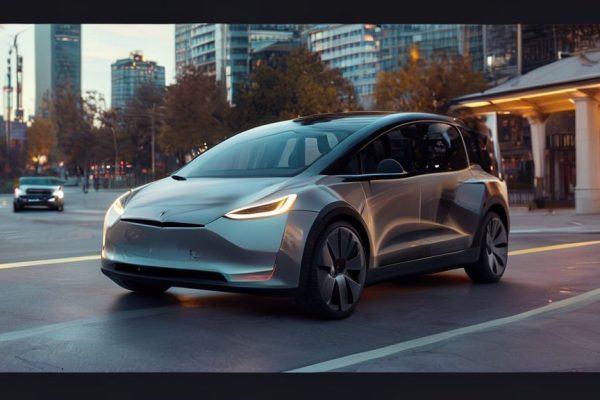
A futuristic illustration of a Tesla robotaxi driving down a city street, with a sleek and modern design. The vehicle is depicted with a glowing blue light on the dashboard, indicating that it is in autonomous mode. The background is a bustling cityscape with towering skyscrapers and busy streets. The image should convey a sense of innovation, technology, and forward-thinking.
Category: Technology






Leave a Reply