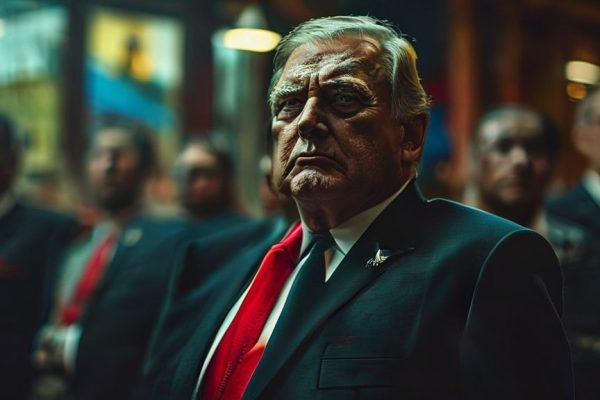
The Venezuelan Coup: A Turning Point in Global Politics
The recent events surrounding Nicolás Maduro’s capture by Donald Trump may have sent shockwaves around the world, leaving many wondering what this means for the future of international relations. The fact that Trump, a former US President, was involved in the capture of the Venezuelan leader has sparked debates about the new era of global politics we seem to be entering.
However, the question remains: what has triggered this shift in international politics? To answer this, we need to look at the broader context and the factors that have led to this unprecedented situation. One of the primary drivers of this change is the increasing role of non-traditional actors in global politics.
Traditional powers like the US, China, and the European Union have long dominated international relations, but the rise of countries like Russia, Turkey, and Saudi Arabia has disrupted the balance of power. These nations have been actively engaging in geopolitics, often using unconventional methods to achieve their goals.
Another factor contributing to the shift is the changing nature of global governance. The post-Cold War era saw the rise of international institutions like the United Nations, the World Trade Organization, and the International Monetary Fund. However, these institutions have struggled to keep pace with the changing global landscape, leading to a power vacuum.
This vacuum has been filled by non-state actors like terrorist organizations, cyber-terrorists, and extremist groups. These entities have been able to exploit the weaknesses in global governance, using social media and other digital platforms to spread their ideologies and recruit followers.
The consequences of this shift are far-reaching and multifaceted. The increasing unpredictability of global politics has created a sense of uncertainty, making it difficult for nations to navigate the complex web of international relations. This has led to a rise in tensions between countries, as they seek to protect their interests in a world that is becoming increasingly unstable.
The future of global politics looks uncertain, with many experts predicting a further rise in nationalism and protectionism. The increasing role of non-traditional actors, the changing nature of global governance, and the rise of non-state actors have created a perfect storm that is reshaping the international landscape.
The Venezuelan Coup: A Catalyst for Change
The Venezuelan coup has been seen as a catalyst for change, with many viewing it as a symbol of the new era of global politics. The fact that Trump, a former US President, was involved in the capture of Maduro has sparked debates about the role of non-traditional actors in global politics.
While the Venezuelan coup has been widely condemned, it has also been seen as a necessary evil in a world where traditional power structures are crumbling. The coup has highlighted the need for a new approach to global governance, one that takes into account the changing nature of international relations.
The Way Forward: A New Era of Global Politics
As the world grapples with the implications of the Venezuelan coup, it is clear that a new era of global politics is emerging. The increasing unpredictability of international relations, the rise of non-traditional actors, and the changing nature of global governance have created a complex and multifaceted landscape.
The way forward will require a new approach to global governance, one that takes into account the changing nature of international relations. This will involve a greater emphasis on cooperation, diplomacy, and dialogue, as well as a willingness to engage with non-traditional actors.
The future of global politics looks uncertain, but one thing is clear: the world will never be the same again. The Venezuelan coup has marked a turning point in international relations, and it is up to nations and international institutions to adapt to the changing landscape.
- The rise of non-traditional actors has disrupted the balance of power in global politics.
- The changing nature of global governance has created a power vacuum that has been filled by non-state actors.
- The increasing unpredictability of international relations has created a sense of uncertainty, making it difficult for nations to navigate the complex web of international relations.
As the world enters a new era of global politics, one thing is clear: the future is uncertain, but it is also full of possibilities.
The Venezuelan coup has marked a turning point in international relations, and it is up to nations and international institutions to adapt to the changing landscape. The way forward will require a new approach to global governance, one that takes into account the changing nature of international relations.
Only time will tell what the future holds, but one thing is certain: the world will never be the same again.






Leave a Reply