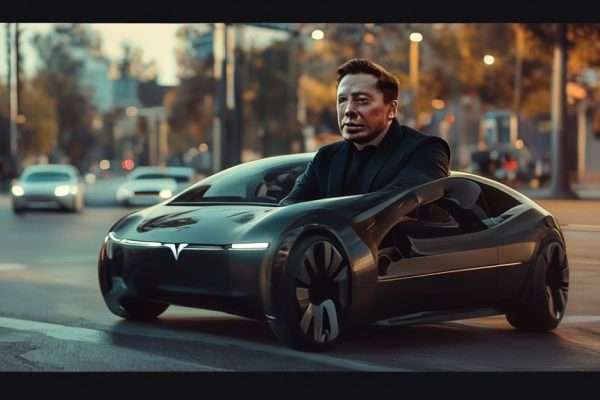
Elon Musk’s Ambitious Plan for Autonomous Robotaxis
On a recent occasion, Elon Musk celebrated a significant milestone in the development of autonomous driving technology by Tesla. The company has reportedly achieved a major breakthrough in its unsupervised robotaxi system, allowing its vehicles to navigate complex roads and scenarios without human intervention. This achievement marks a crucial step towards the widespread adoption of autonomous vehicles, but it also raises concerns about safety, regulation, and public acceptance.
Tesla’s unsupervised robotaxi system is designed to enable the company’s vehicles to operate without human oversight, allowing for increased efficiency, reduced costs, and enhanced passenger experience. However, the immediate future of this technology is uncertain, and it remains unclear how many people will be able to ride in these vehicles.
The Challenges of Autonomous Driving
Autonomous driving technology is a complex and rapidly evolving field, with numerous challenges to overcome before it can be widely adopted. These challenges include ensuring the safety and reliability of autonomous vehicles, addressing concerns about liability and regulation, and winning over the public’s trust.
According to industry experts, one of the biggest hurdles to widespread adoption is the need for more advanced sensor technology and sophisticated software. While Tesla has made significant progress in this area, there is still much work to be done to ensure that autonomous vehicles can operate safely and efficiently in a wide range of scenarios.
The Regulatory Landscape
The regulatory landscape for autonomous vehicles is still in its infancy, with various governments and international organizations grappling with the complexities of this new technology. In the United States, for example, there are ongoing debates about the role of federal and state governments in regulating autonomous vehicles, as well as concerns about liability and safety standards.
While some countries, such as Singapore and the United Arab Emirates, have established clear regulatory frameworks for autonomous vehicles, others are lagging behind. This lack of consistency and clarity creates uncertainty for companies like Tesla, which must navigate complex regulatory environments to deploy their autonomous vehicle technology.
The Future of Mobility
Despite the challenges and uncertainties surrounding autonomous driving technology, many experts believe that it holds the key to a more sustainable and efficient future of mobility. By reducing the need for human drivers, autonomous vehicles could help to decrease congestion, reduce emissions, and improve safety on our roads.
However, this vision of the future is still in its early stages, and there is much work to be done before it can become a reality. As Tesla continues to push the boundaries of autonomous driving technology, it is essential that governments, industry leaders, and the public come together to address the challenges and uncertainties surrounding this technology.
Key points:
- Tesla has achieved a significant milestone in the development of autonomous driving technology, with its unsupervised robotaxi system.
- The immediate future of this technology is uncertain, and it remains unclear how many people will be able to ride in these vehicles.
- Autonomous driving technology is a complex and rapidly evolving field, with numerous challenges to overcome before it can be widely adopted.
- The regulatory landscape for autonomous vehicles is still in its infancy, with various governments and international organizations grappling with the complexities of this new technology.
- Despite the challenges and uncertainties surrounding autonomous driving technology, many experts believe that it holds the key to a more sustainable and efficient future of mobility.
As we move forward in this exciting and rapidly evolving field, it is essential that we address the challenges and uncertainties surrounding autonomous driving technology. By working together, we can create a safer, more sustainable, and more efficient future of mobility for all.






Leave a Reply