Elon Musk’s Unsupervised Robotaxis: Revolutionizing Transportation or a Recipe for Disaster?
Elon Musk, the CEO of Tesla and SpaceX, has made headlines with the announcement of the company’s unsupervised robotaxis. The milestone marks a significant step towards the development of autonomous vehicles, but it raises several questions about the safety and feasibility of such technology.
The Background and Context
Tesla has been working on its Full Self-Driving (FSD) technology for several years, which enables vehicles to navigate and make decisions without human intervention. The company has already launched a beta version of FSD, but it requires human oversight. The unsupervised robotaxis represent a significant leap forward, as they can operate without human input.
However, the development of unsupervised robotaxis is not without its challenges. The technology requires a high degree of precision and reliability, as well as the ability to adapt to complex and dynamic environments. Moreover, the vehicles must be able to interact with other road users, pedestrians, and infrastructure in a safe and efficient manner.
The Reasons Behind the Unsupervised Robotaxis
Elon Musk has stated that the unsupervised robotaxis are a key part of Tesla’s vision for the future of transportation. The technology has the potential to revolutionize the way we travel, making it faster, safer, and more convenient. Additionally, the robotaxis could potentially reduce the number of accidents caused by human error, which is estimated to be around 90% of all crashes.
However, some experts have raised concerns about the safety and liability implications of unsupervised robotaxis. If an accident occurs, who will be held responsible – the manufacturer, the owner, or the passenger? The development of unsupervised robotaxis also raises questions about the role of human drivers and the need for regulatory frameworks to govern their use.
The Future Implications and Challenges
The successful deployment of unsupervised robotaxis has the potential to transform the transportation industry, but it also poses significant challenges. The technology requires a high degree of investment and infrastructure development, including the creation of dedicated lanes and charging stations. Moreover, the deployment of unsupervised robotaxis raises questions about job displacement, as many human drivers may lose their jobs as a result of automation.
Furthermore, the development of unsupervised robotaxis also raises concerns about cybersecurity and data privacy. The vehicles will be collecting vast amounts of data, which could potentially be used to monitor and control the movement of individuals. The deployment of unsupervised robotaxis also raises questions about the need for regulatory frameworks to govern their use and ensure public safety.
Key Points to Consider
- The development of unsupervised robotaxis represents a significant step towards the development of autonomous vehicles.
- The technology requires a high degree of precision and reliability, as well as the ability to adapt to complex and dynamic environments.
- The deployment of unsupervised robotaxis raises questions about job displacement, cybersecurity, and data privacy.
- The development of unsupervised robotaxis requires significant investment and infrastructure development.
As the world moves towards a future of autonomous transportation, it is essential to consider the implications and challenges of unsupervised robotaxis. While the technology has the potential to revolutionize the way we travel, it also raises significant concerns about safety, liability, and regulatory frameworks. As we move forward, it is crucial to strike a balance between innovation and public safety.
Conclusion
The development of unsupervised robotaxis marks a significant milestone in the development of autonomous vehicles. While the technology has the potential to revolutionize the way we travel, it also raises significant concerns about safety, liability, and regulatory frameworks. As we move forward, it is essential to consider the implications and challenges of unsupervised robotaxis and ensure that public safety is prioritized.
Image Prompt
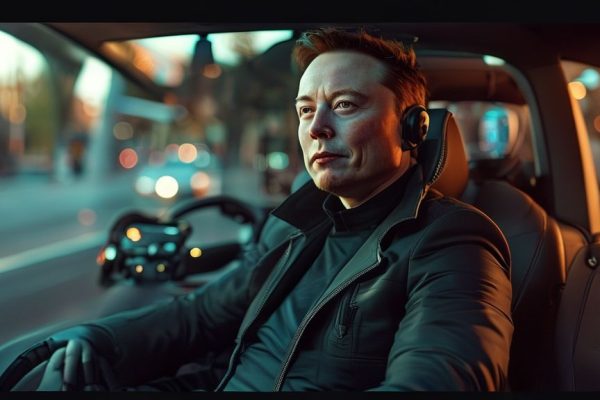
An AI-generated image of a Tesla robotaxi driving down a city street, with a futuristic cityscape in the background. The robotaxi is depicted as a sleek and modern vehicle, with a glowing blue light emanating from its dashboard. The image should convey a sense of innovation, technology, and possibility.






Leave a Reply