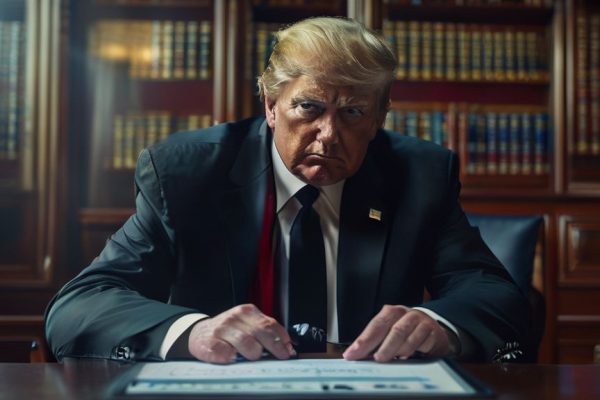
Trump Administration Plans to Use AI to Write Federal Transportation Regulations
The Trump administration is planning to use artificial intelligence to write federal transportation regulations, according to U.S. Department of Transportation documents obtained by ProPublica. This move has raised significant concerns over transparency and accountability in the regulatory process.
Background on AI-Powered Regulation
The use of artificial intelligence in regulatory writing is not new, but it is an unprecedented step for the federal government. In 2019, the Department of Transportation (DOT) began using AI-powered tools to assist in the development of regulations. However, the current plan goes a step further by relying heavily on AI to write the regulations themselves.
The DOT’s plan is to use natural language processing (NLP) technology to generate draft regulations based on data and input from various sources, including industry stakeholders and experts. The AI system will then analyze the data and create a draft regulation, which will be reviewed and edited by human regulators before being finalized.
Proponents of AI-powered regulation argue that it can increase efficiency, reduce costs, and improve consistency in the regulatory process. However, critics are concerned that relying on AI to write regulations could lead to a lack of transparency and accountability.
Concerns Over Transparency and Accountability
One of the primary concerns surrounding the use of AI in regulatory writing is the lack of transparency. Under the current plan, the AI system will generate draft regulations without human input, making it difficult to track the decision-making process.
Another concern is the potential for bias in the AI system. If the AI is trained on biased data, it may produce regulations that reflect those biases, leading to unequal treatment of certain groups or industries.
The use of AI in regulatory writing also raises questions about accountability. If the AI system makes an error or produces a flawed regulation, who will be held responsible?
Future Implications and Potential Consequences
The use of AI in regulatory writing has far-reaching implications for the federal government and the public. If the plan is implemented, it could set a precedent for other government agencies to adopt similar approaches.
However, the potential consequences of relying on AI to write regulations are significant. If the AI system produces flawed or biased regulations, it could lead to costly lawsuits, reputational damage to the government, and harm to the public interest.
To mitigate these risks, the government must ensure that the AI system is transparent, accountable, and free from bias. This may involve implementing robust checks and balances, providing clear explanations for AI-driven decisions, and ensuring that human regulators are involved in the review and editing process.
Key Takeaways
- The Trump administration plans to use AI to write federal transportation regulations.
- The use of AI in regulatory writing raises concerns over transparency and accountability.
- The potential consequences of relying on AI to write regulations are significant, including costly lawsuits and reputational damage.
- The government must ensure that the AI system is transparent, accountable, and free from bias.
Image Prompt:
A futuristic illustration of a government official sitting at a desk, surrounded by screens and computers. The official is looking at a screen displaying a draft regulation generated by an AI system. In the background, there is a cityscape with cars and buses moving through the streets. The image should convey a sense of technology and innovation, but also raise questions about the potential consequences of relying on AI to make important decisions.
Category: Technology






Leave a Reply