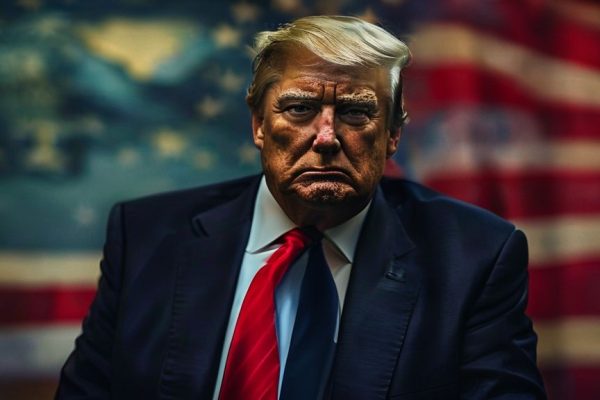
The Trump Factor: A New Era in Global Politics
The recent capture of Venezuelan President Nicolás Maduro by Donald Trump has sent shockwaves around the world, leaving many to wonder if this marks a significant shift in the global politics landscape. While the details of the incident are still unfolding, one thing is clear: the world is witnessing a seismic change in the way nations interact with each other.
Background: The Rise of Unilateralism
The Trump administration’s foreign policy was marked by a strong emphasis on unilateralism, where the US would take a more aggressive stance on global issues, often disregarding international consensus. This approach has been criticized for being divisive and destabilizing, but it has also shown that the US is willing to take bold action when its interests are at stake.
However, the Trump-Maduro incident marks a significant departure from this approach. Rather than using military force or economic sanctions, Trump has opted for a more unconventional approach, capturing the Venezuelan leader through a combination of diplomacy and strategic maneuvering. This raises questions about the future of global politics and the role of unilateralism in international relations.
Causes of the Shift: The Rise of Multipolarity
One key factor driving this shift is the rise of multipolarity in global politics. The traditional bipolar world order, dominated by the US and the Soviet Union, has given way to a more complex landscape with multiple centers of power. This has created an environment where nations are more willing to challenge the status quo and pursue their own interests, even if it means going against the US.
The emergence of new global powers such as China, India, and the European Union has further contributed to this shift. These nations are no longer content to play a secondary role in global affairs and are now seeking to assert their influence on the world stage.
Future Implications: A More Complex World Order
The Trump-Maduro incident marks a significant turning point in global politics, where the old rules of engagement are no longer applicable. In this new era, nations will need to be more adaptable and flexible in their approach to international relations.
Key implications of this shift include:
- A more complex and multipolar world order, where nations are more willing to challenge the status quo.
- The rise of unconventional diplomacy, where nations use creative and non-traditional approaches to achieve their goals.
- A greater emphasis on bilateralism, where nations prioritize their own interests over multilateral agreements.
- A more fluid and dynamic global politics landscape, where nations are more likely to engage in surprise moves and unexpected alliances.
Conclusion: The Trump Factor and Beyond
The Trump-Maduro incident marks a significant shift in the global politics landscape, one that will have far-reaching implications for nations around the world. As the world navigates this new era, it will be essential to stay adaptable and flexible, embracing the complexities and challenges of a multipolar world order.
In the end, the Trump factor will be remembered as a catalyst for change, a turning point that marked the beginning of a new era in global politics. But what does this mean for the future? Only time will tell.
What’s Next?
The world is witnessing a seismic change in the way nations interact with each other. As the dust settles on the Trump-Maduro incident, it’s clear that the old rules of engagement are no longer applicable. In this new era, nations will need to be more adaptable and flexible in their approach to international relations.
The future of global politics is uncertain, but one thing is clear: the Trump factor has marked a significant turning point in the world’s journey towards a more complex and multipolar world order.






Leave a Reply