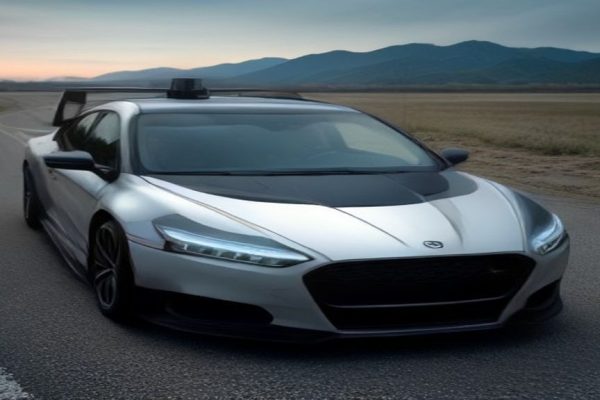
Autonomous Cars on the Horizon: A Conversation with Xinzhou Wu
Xinzhou Wu, a renowned expert in the field of autonomous vehicles, has been making waves with his thoughts on the future of self-driving cars. In a recent interview, Wu shared his insights on the role of lidar technology in autonomous vehicles, the potential of Chinese innovation in the sector, and what it would take for the industry to reach full autonomy.
The Lidar Debate: Do We Really Need It?
One of the most significant challenges facing the development of autonomous cars is the integration of lidar technology. Lidar, or light detection and ranging, uses laser light to create high-resolution 3D maps of the environment, allowing vehicles to detect and respond to their surroundings. However, the high cost and weight of lidar systems have led some experts to question whether they are truly necessary.
Xinzhou Wu, however, believes that lidar is a crucial component of autonomous vehicles. ‘Lidar provides a level of accuracy and resolution that is unmatched by other sensors,’ he explained. ‘It’s not just about detecting objects, but also about understanding the environment and making informed decisions.’
Wu’s comments are significant, given the growing trend of Chinese manufacturers developing lidar-free autonomous vehicles. Companies like Baidu and WeRide have made significant strides in this area, using cameras and other sensors to navigate complex environments. However, Wu’s assertion that lidar is essential for full autonomy suggests that Chinese innovation may not be enough to overcome the technical challenges facing the industry.
The Rise of Chinese Innovation in Autonomous Vehicles
China has emerged as a leader in the development of autonomous vehicles, with companies like Baidu, WeRide, and Geely investing heavily in the sector. Xinzhou Wu attributes this success to the country’s unique combination of government support, private investment, and technical expertise.
‘China has created a favorable business environment for the development of autonomous vehicles,’ Wu said. ‘The government has provided significant funding and support, while private companies have invested in the latest technologies and talent.’
However, Wu also cautioned that Chinese innovation in autonomous vehicles is not without its challenges. ‘While China has made significant progress, the country still lags behind the US and Europe in terms of technical expertise and regulatory frameworks,’ he noted.
The Path to Full Autonomy: Challenges and Opportunities
So, what does it take for the industry to reach full autonomy? Xinzhou Wu believes that it will require a combination of technical advancements, regulatory frameworks, and public acceptance.
‘We need to see significant improvements in sensor technology, AI processing power, and software development,’ Wu said. ‘Additionally, regulatory frameworks need to be put in place to ensure public safety and confidence in the technology.’
Wu also emphasized the importance of public acceptance, noting that widespread adoption of autonomous vehicles will depend on consumers’ willingness to trust the technology.
‘Autonomous vehicles are not just a technical challenge, but also a social and psychological one,’ Wu explained. ‘We need to educate the public about the benefits and limitations of the technology, and build trust in the system.’
Conclusion
Xinzhou Wu’s insights offer a fascinating glimpse into the future of autonomous cars. While Chinese innovation is driving significant progress in the sector, the technical challenges facing the industry are still significant. By understanding the role of lidar technology, the potential of Chinese innovation, and the path to full autonomy, we can better appreciate the complex landscape of autonomous vehicles and the opportunities and challenges that lie ahead.






Leave a Reply