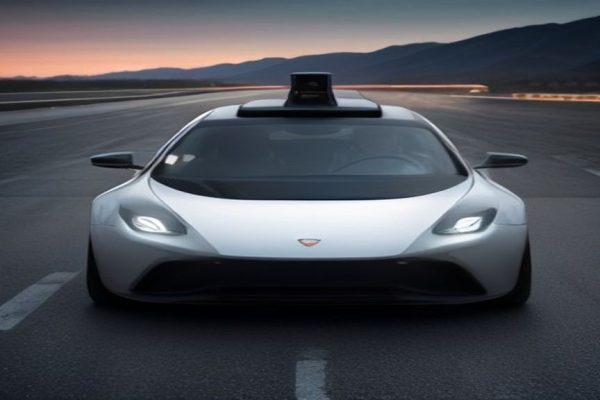
Autonomous Cars and the Role of Lidar Technology
As the world continues to navigate the complex landscape of transportation and technology, the concept of autonomous cars has become increasingly prominent. With companies like Waymo and Tesla leading the charge, the focus has largely been on the development of self-driving vehicles that can navigate roads safely and efficiently. However, one crucial aspect of this technology has been receiving less attention: lidar.
The Importance of Lidar in Autonomous Cars
Lidar, or Light Detection and Ranging, is a sensing technology that uses laser light to create high-resolution 3D maps of a vehicle’s surroundings. By emitting pulses of laser light and measuring the time-of-flight and wavelength of the returning signals, lidar systems can create detailed images of the environment, allowing autonomous vehicles to navigate complex scenarios with ease. While cameras and radar systems can provide some level of environmental awareness, lidar offers a crucial layer of depth perception and accuracy, making it an essential component of modern autonomous cars.
The Rise of Chinese Innovation in Autonomous Cars
While the United States has been at the forefront of autonomous car development, China has been quietly building its own ecosystem of innovation. Companies like Xpeng, Byton, and NIO are pushing the boundaries of autonomous technology, leveraging lidar and other sensing technologies to create vehicles that can navigate complex urban environments. The Chinese government has also been actively investing in autonomous car development, providing funding and resources to companies working on this cutting-edge technology.
According to an interview with Xinzhou Wu, a prominent figure in the Chinese autonomous car industry, the focus on lidar technology is crucial for the development of safe and efficient autonomous vehicles. ‘Lidar is the key to unlocking the full potential of autonomous cars,’ Wu explained. ‘Without it, our vehicles would struggle to navigate complex scenarios, and the risks associated with accidents would be too great to ignore.’
Implications for the Future of Autonomous Cars
The rise of Chinese innovation in autonomous cars has significant implications for the future of this technology. As more companies enter the market, the cost of lidar and other sensing technologies is likely to decrease, making autonomous vehicles more accessible to consumers. Additionally, the increased competition could drive innovation, leading to the development of more advanced and efficient autonomous car systems.
However, the shift in the global landscape of autonomous car development also raises concerns about regulatory frameworks and the potential for a ‘race to the bottom’ in terms of safety standards. As companies compete to bring their autonomous vehicles to market, the risk of accidents and other safety issues could increase, potentially undermining public trust in this technology.
Conclusion
The future of autonomous cars is complex and multifaceted, with lidar technology playing a crucial role in the development of safe and efficient vehicles. As the global landscape of autonomous car development continues to evolve, it is essential to prioritize innovation and safety, ensuring that these vehicles can navigate complex scenarios with ease and precision.
The rise of Chinese innovation in autonomous cars is a significant development in this landscape, offering new opportunities for growth and collaboration. However, it also raises concerns about regulatory frameworks and the potential for a ‘race to the bottom’ in terms of safety standards. As we move forward in this rapidly evolving field, it is crucial to prioritize transparency, accountability, and safety, ensuring that the benefits of autonomous cars are accessible to all.






Leave a Reply