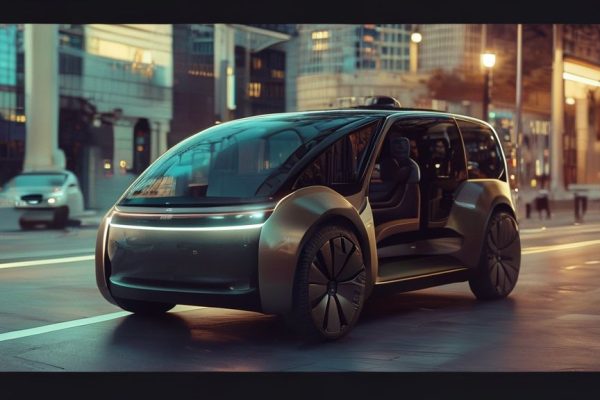
Breakthrough in Autonomous Transportation
Elon Musk’s ambitious vision for a future where Teslas can operate without human intervention has taken a significant step forward. The billionaire entrepreneur celebrated the milestone, marking a major breakthrough in the development of unsupervised robotaxis. However, questions arise regarding the immediate accessibility of this technology to the general public.
The Road to Autonomy
The journey to making Teslas fully autonomous has been a long and complex one. Musk has been at the forefront of this innovation, pouring significant resources into developing the necessary software and hardware. The company has been testing its autonomous driving capabilities on public roads for several years, with varying degrees of success. The recent breakthrough is a testament to the company’s perseverance and commitment to pushing the boundaries of what is possible.
While the achievement is significant, it is essential to understand the context behind it. The development of unsupervised robotaxis is a complex task that requires significant advancements in areas such as computer vision, machine learning, and sensor technology. The ability to navigate complex road scenarios, respond to emergency situations, and interact with pedestrians and other vehicles is a daunting challenge that has taken years to overcome.
Accessibility Concerns
As the world waits with bated breath for the widespread adoption of unsupervised robotaxis, concerns regarding accessibility have begun to emerge. The question on everyone’s lips is: how many people will be able to ride in Teslas’ newly unsupervised robotaxis in the immediate future? The answer, unfortunately, is unclear.
Musk’s vision for a future where anyone can hail a ride in a self-driving taxi is commendable, but the reality is that the technology is still in its nascent stages. The development of a robust and reliable autonomous driving system is a complex task that requires significant investment in hardware, software, and testing. The timeline for widespread adoption is uncertain, and it is likely to be several years before the technology becomes accessible to the general public.
To make matters worse, the regulatory landscape surrounding autonomous vehicles is still in its infancy. Governments and regulatory bodies are still grappling with the implications of allowing vehicles to operate without human intervention. The lack of clear guidelines and regulations has created a sense of uncertainty, making it challenging for companies like Tesla to navigate the complex landscape.
The Future of Transportation
Despite the challenges, the development of unsupervised robotaxis has the potential to revolutionize the transportation industry. Imagine a future where anyone can hail a ride in a self-driving taxi, without the need for human intervention. The benefits are numerous, including reduced traffic congestion, improved safety, and increased mobility for the elderly and disabled.
However, for this vision to become a reality, significant advancements are needed. The development of robust and reliable autonomous driving systems, the creation of a regulatory framework that allows for the widespread adoption of autonomous vehicles, and the implementation of necessary infrastructure are just a few of the challenges that need to be addressed.
In conclusion, Musk’s robotaxi dream has taken a significant step forward, but accessibility remains a concern. While the development of unsupervised robotaxis is a complex task, the potential benefits are numerous. As the world waits with bated breath for the widespread adoption of this technology, it is essential to understand the challenges and complexities involved.
The future of transportation is uncertain, but one thing is clear: the development of unsupervised robotaxis is a significant step towards creating a safer, more efficient, and more accessible transportation system.






Leave a Reply