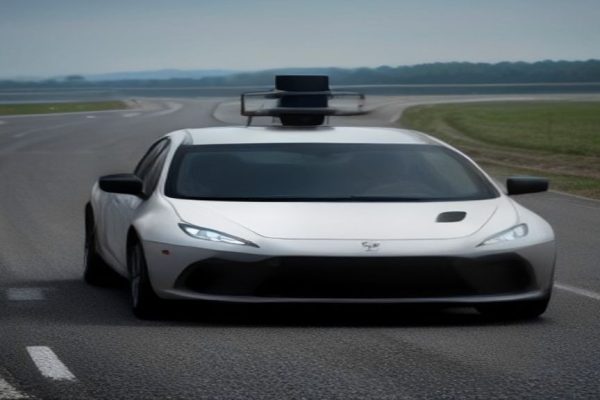
Expert Insights on Autonomous Vehicles and Lidar Technology
In a recent discussion, Xinzhou Wu, a renowned expert in the field of autonomy, shared his thoughts on the current state of autonomous vehicles, particularly in the context of Chinese electric vehicles (EVs). Wu’s comments have sparked a debate about the role of lidar technology in achieving true autonomy.
Lidar, short for Light Detection and Ranging, is a key sensor used in autonomous vehicles to detect and map the environment. However, Wu’s assertion that lidar may not be necessary for advanced autonomy has raised eyebrows among industry experts.
The State of Autonomous Vehicles in China
China has been at the forefront of electric vehicle adoption, with many major manufacturers investing heavily in EV technology. The country’s aggressive EV targets, combined with its vast market size, have made it an attractive destination for companies looking to capitalize on the trend.
Wu’s comments suggest that China’s EV manufacturers are prioritizing other technologies, such as computer vision and machine learning, to achieve advanced autonomy. This approach could potentially reduce the reliance on lidar, making autonomous vehicles more cost-effective and feasible for mass production.
The Role of Lidar in Autonomous Vehicles
Lidar technology has been touted as a crucial component in achieving true autonomy. However, its high cost and limited range have raised concerns about its practicality in real-world applications.
Wu’s statement that lidar may not be necessary for advanced autonomy has sparked a debate among experts. Some argue that lidar is essential for providing a detailed 3D map of the environment, which is critical for safe and efficient navigation. Others believe that alternative technologies, such as camera-based systems, can achieve similar results at a lower cost.
As the debate continues, it’s clear that the future of autonomous vehicles will depend on the development of cost-effective and reliable sensor technologies. While lidar may still have a role to play, its necessity is being questioned by experts like Wu.
Implications for the Industry
The implications of Wu’s comments are far-reaching, with potential impacts on the development of autonomous vehicles worldwide. If China’s EV manufacturers are able to achieve advanced autonomy without relying on lidar, it could set a new standard for the industry.
This could lead to a shift in focus towards alternative technologies, potentially reducing the reliance on lidar and making autonomous vehicles more accessible to a wider audience. However, it also raises concerns about the potential for reduced safety and increased complexity in autonomous systems.
As the autonomous vehicle industry continues to evolve, one thing is clear: the future of transportation will be shaped by the development of innovative technologies and the experts who push the boundaries of what is possible.
Key points:
- Xinzhou Wu, an expert in autonomy, has questioned the necessity of lidar technology in achieving advanced autonomy.
- China’s EV manufacturers are prioritizing alternative technologies, such as computer vision and machine learning, to achieve advanced autonomy.
- The debate surrounding lidar’s role in autonomous vehicles has sparked concerns about safety and complexity.
- The future of autonomous vehicles will depend on the development of cost-effective and reliable sensor technologies.






Leave a Reply