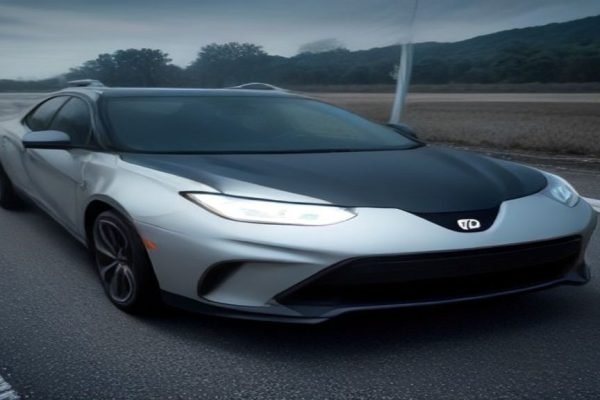
The Future of Autonomous Driving: Chinese Cars and the Role of Lidar
In a recent interview, Xinzhou Wu, a prominent figure in the field of autonomous driving, shared his insights on the current state of Chinese cars and the role of lidar technology in achieving true autonomy. As the world’s automotive industry continues to evolve, we take a closer look at the advancements and challenges in this sector.
The Rise of Chinese Car Manufacturers
China has emerged as a leader in the global automotive industry, with several homegrown brands, such as Geely and BYD, gaining significant traction. Chinese car manufacturers have been rapidly investing in research and development, focusing on electric and autonomous vehicles. This shift towards electrification and autonomy is driven by the government’s policies, which aim to reduce carbon emissions and promote sustainable transportation.
One of the key players in this space is Xpeng Motors, a Chinese electric vehicle manufacturer that has been making waves with its advanced technology and innovative designs. Xpeng’s cars are equipped with cutting-edge features, including lidar sensors, which enable them to navigate complex scenarios and detect potential hazards.
The Role of Lidar in Autonomous Driving
Lidar, or Light Detection and Ranging, is a technology that uses laser light to create high-resolution 3D images of the environment. In the context of autonomous driving, lidar sensors play a crucial role in detecting and responding to various obstacles, such as pedestrians, other vehicles, and road markings.
According to Xinzhou Wu, lidar technology is essential for achieving true autonomy. He believes that while camera-based systems can provide decent performance in controlled environments, they fall short in more complex scenarios, such as construction zones or heavy rain. Lidar sensors, on the other hand, can provide accurate and reliable data, enabling vehicles to make informed decisions and navigate challenging situations.
Challenges and Future Implications
While lidar technology holds significant promise for autonomous driving, there are still several challenges that need to be addressed. One of the primary concerns is the high cost of lidar sensors, which can be a barrier for widespread adoption. Additionally, the complexity of integrating lidar data with other sensors and systems requires significant expertise and resources.
As the world’s automotive industry continues to evolve, the future implications of lidar technology and Chinese car manufacturers are far-reaching. With the increasing demand for electric and autonomous vehicles, companies like Xpeng Motors and Geely are well-positioned to capitalize on this trend. Governments, too, will play a crucial role in shaping the regulatory environment, ensuring that safety standards are met while promoting innovation and competition.
Key Takeaways
- Chinese car manufacturers are rapidly investing in research and development, focusing on electric and autonomous vehicles.
- Lidar technology is essential for achieving true autonomy, providing accurate and reliable data for complex scenarios.
- Challenges, such as high costs and integration complexities, need to be addressed for widespread adoption.
- Geely, Xpeng Motors, and other Chinese car manufacturers are well-positioned to capitalize on the growing demand for electric and autonomous vehicles.






Leave a Reply