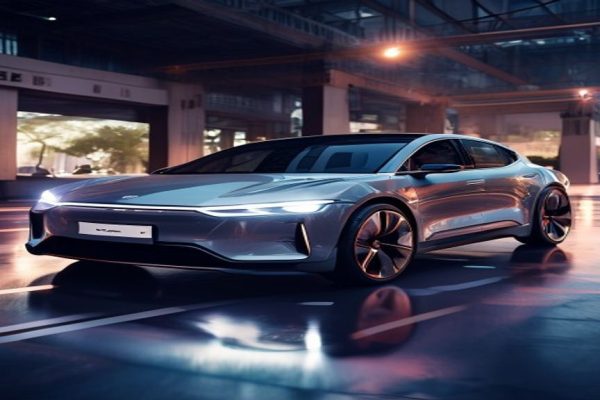
Chinese Electric Cars: The Future of Autonomy and the Role of Lidar
In a recent interview, Xinzhou Wu, a renowned expert in the field of autonomous vehicles, shed light on the current state of Chinese electric cars and the role of lidar technology in achieving true autonomy.
The Rise of Chinese Electric Cars
China has been at the forefront of the electric vehicle (EV) revolution, with numerous Chinese companies investing heavily in the development of EVs. The Chinese government has also implemented various initiatives to promote the adoption of EVs, including generous subsidies and incentives. As a result, China has become the world’s largest market for EVs, accounting for over 50% of global sales.
Chinese companies such as BYD, Geely, and Great Wall Motors have been leading the charge in the EV space, with many of them offering a range of affordable and feature-packed models. These companies have been able to leverage their economies of scale and manufacturing expertise to produce high-quality EVs at competitive prices.
The Role of Lidar in Autonomy
Lidar (Light Detection and Ranging) technology is a crucial component in achieving true autonomy in vehicles. Lidar sensors use laser light to create high-resolution 3D maps of the environment, allowing vehicles to detect obstacles and navigate through complex terrain. In the context of autonomous vehicles, lidar technology plays a vital role in enabling vehicles to detect and respond to their surroundings in real-time.
However, lidar technology is not without its challenges. High-resolution lidar sensors are expensive and power-hungry, making them a significant burden on the battery life of autonomous vehicles. Additionally, the data generated by lidar sensors can be overwhelming, requiring sophisticated algorithms to process and interpret.
Xinzhou Wu highlighted the importance of lidar technology in achieving true autonomy, stating that “lidar is a key component in enabling vehicles to understand their surroundings and make decisions in real-time.” However, he also acknowledged the challenges associated with lidar technology, noting that “the cost and power consumption of lidar sensors are significant challenges that need to be addressed.”
The Future of Autonomy in Chinese Electric Cars
The future of autonomy in Chinese electric cars looks promising, with many Chinese companies investing heavily in the development of autonomous driving technologies. Xinzhou Wu predicted that “autonomous vehicles will become increasingly common in the next decade, with Chinese companies leading the charge.”
However, the path to true autonomy will be fraught with challenges, including regulatory hurdles, public acceptance, and technical complexity. Chinese companies will need to continue investing in research and development to overcome these challenges and deliver on the promise of autonomy.
In conclusion, the future of Chinese electric cars looks bright, with lidar technology playing a vital role in achieving true autonomy. While there are challenges associated with lidar technology, Chinese companies are well-positioned to overcome these challenges and deliver on the promise of autonomy.
Key Takeaways:
- China has become the world’s largest market for electric vehicles, accounting for over 50% of global sales.
- Chinese companies such as BYD, Geely, and Great Wall Motors have been leading the charge in the EV space.
- Lidar technology is a crucial component in achieving true autonomy in vehicles.
- High-resolution lidar sensors are expensive and power-hungry, making them a significant burden on the battery life of autonomous vehicles.
- Chinese companies are investing heavily in the development of autonomous driving technologies.






Leave a Reply