Giant Invasive Crabs Take Over English Shores
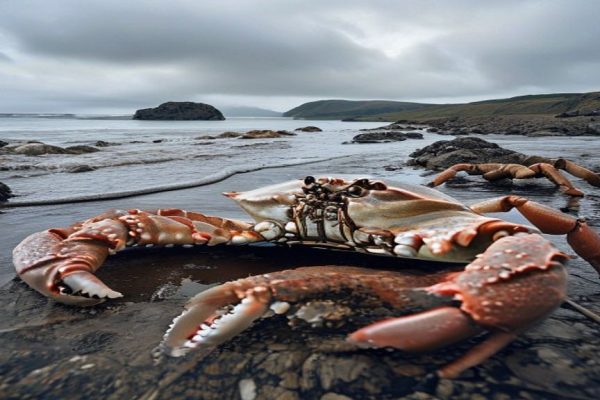
Reports have surfaced of an unexpected and alarming invasion of England’s coastline by giant invasive crabs. The sudden appearance of these massive crustaceans has left locals and marine experts alike in a state of shock, sparking concerns over their impact on the region’s delicate ecosystem.
According to eyewitnesses, there are at least 20 of these enormous crabs roaming the shores, with some estimates suggesting that their numbers could grow exponentially in the coming months. While the species has not been formally identified, experts speculate that they may be an invasive Asian shore crab (Hemigrapsus sanguineus), known for its aggressive behavior and ability to outcompete native species.
The introduction of these non-native crabs poses a significant threat to England’s marine biodiversity. As opportunistic feeders, they will target a wide range of invertebrates, fish, and even algae, potentially disrupting the food chain and altering the balance of the ecosystem. Moreover, these crabs can also spread disease and parasites, further exacerbating the problem.
Background and Context
The Asian shore crab is a well-documented invasive species that has been causing problems in other parts of the world, including North America and Europe. They are known for their ability to adapt quickly to new environments and thrive in a wide range of habitats, from shallow tide pools to deeper waters.
It is likely that these crabs were introduced to England through human activity, such as the transport of cargo or contaminated equipment. Once established, they can rapidly multiply and spread, making it challenging to control their population.
The consequences of an unchecked invasive species can be far-reaching and devastating. In addition to the ecological impacts, invasive species can also lead to economic losses, particularly in the fishing and tourism industries.
Future Implications and Concerns
The discovery of these giant invasive crabs in England raises serious concerns about the future of the region’s marine ecosystem. As the population grows, it is essential that authorities take immediate action to mitigate the risks associated with these invasive species.
Experts recommend a multi-faceted approach to addressing the issue, including research on the species’ behavior, diet, and habitat requirements, as well as the implementation of effective control measures, such as trapping and removal.
Local residents are also being urged to report any further sightings of the crabs, enabling authorities to monitor their movement and distribution. By working together, it may be possible to prevent the spread of this invasive species and protect the integrity of England’s marine ecosystem.
- At least 20 giant invasive crabs have been spotted in England, with concerns over their ecological impact.
- The species is believed to be an Asian shore crab (Hemigrapsus sanguineus), known for its aggressive behavior and ability to outcompete native species.
- The introduction of these non-native crabs poses a significant threat to England’s marine biodiversity and could lead to economic losses in the fishing and tourism industries.






Leave a Reply