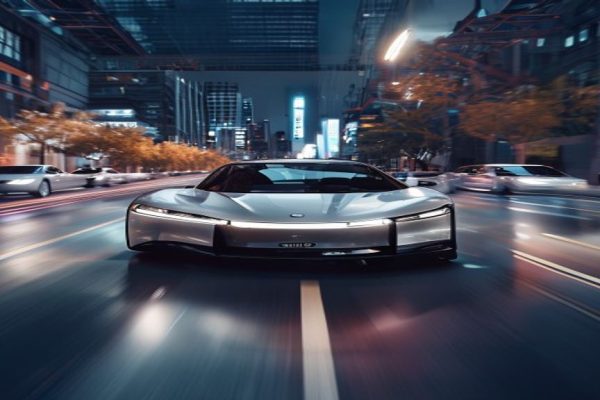
The automotive industry is on the cusp of a revolution, with autonomous vehicles (AVs) promising to transform the way we travel. At the forefront of this innovation is China, a country that has made significant strides in developing its own autonomous driving technologies. In a recent interview, Xinzhou Wu, a renowned expert in the field, shared his insights on the current state of autonomous Chinese cars, the role of lidar, and the future implications of this technology.
China’s Autonomous Driving Ambitions
China has emerged as a global leader in autonomous driving, with several homegrown companies, including Baidu, Alibaba, and Tencent, investing heavily in this technology. Xinzhou Wu attributes this success to the country’s unique combination of government support, private investment, and a vast market size. “China’s authoritarian governance system allows for faster decision-making and implementation, which has been a key factor in our progress,” he notes.
China’s autonomous driving ambitions are not limited to passenger vehicles. The country is also investing in autonomous trucks and buses, which could revolutionize the logistics and public transportation sectors. Wu believes that autonomous driving will have a significant impact on China’s economy, particularly in regions with limited infrastructure and transportation networks.
The Role of Lidar in Autonomous Driving
Lidar (Light Detection and Ranging) technology is a critical component of autonomous vehicles, enabling them to perceive their surroundings with high accuracy. Wu emphasizes the importance of lidar in developing reliable and safe autonomous driving systems. “Lidar provides a 3D map of the environment, which is essential for autonomous vehicles to navigate complex scenarios,” he explains.
However, Wu also acknowledges the limitations of lidar, particularly in areas with heavy foliage or adverse weather conditions. To overcome these challenges, researchers are exploring alternative sensing technologies, such as radar, camera, and ultrasonic sensors. Wu believes that a multi-sensor approach will be necessary to achieve high levels of autonomy.
The Future of Autonomous Chinese Cars
The future of autonomous Chinese cars looks promising, with several companies already testing their vehicles on public roads. Wu predicts that we will see significant advancements in the next few years, particularly in areas such as highway driving and urban navigation. However, he also cautions that the development of autonomous driving technology is a complex and iterative process.
“Autonomous driving is not just about technology; it’s also about societal acceptance and regulatory frameworks,” Wu notes. He emphasizes the need for governments to create clear guidelines and standards for the development and deployment of autonomous vehicles.
Conclusion
The rise of autonomous Chinese cars is a significant development in the global automotive industry. With China’s unique combination of government support, private investment, and a vast market size, the country is poised to play a leading role in the development of autonomous driving technologies. As we look to the future, it’s clear that autonomous vehicles will have a profound impact on our transportation systems and society as a whole.
Whether you’re a tech enthusiast, an investor, or simply a curious individual, the conversation around autonomous Chinese cars is one that will continue to shape the future of mobility. With experts like Xinzhou Wu at the forefront of this innovation, we can expect significant advancements in the years to come.






Leave a Reply