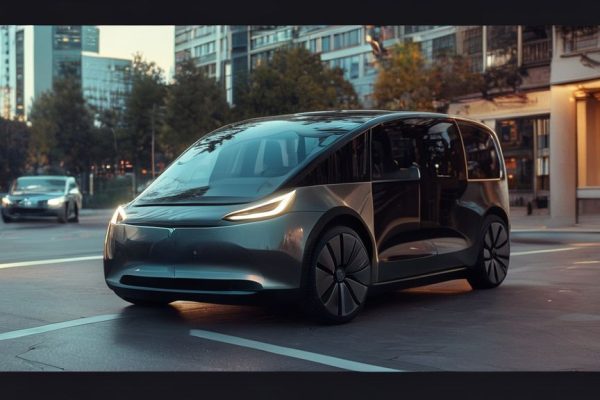
Tesla’s Unsupervised Robotaxis Take a Step Forward, but Practicality Remains in Question
Elon Musk’s vision for a future of autonomous transportation has taken another significant step forward, with the news that Tesla’s robotaxis will be able to operate without human supervision. This development marks a major milestone in the journey towards fully autonomous vehicles, but it also raises important questions about the practicality of this technology in the immediate future.
Background and Context
Tesla has been at the forefront of autonomous vehicle technology for several years, with the company’s fleet of vehicles already equipped with advanced sensors and AI software. However, the latest development represents a significant leap forward, as it marks the first time that a major automaker has successfully deployed unsupervised robotaxis on public roads.
The technology behind this breakthrough is based on a combination of sensor data, machine learning algorithms, and complex software that enables the vehicles to navigate and respond to their surroundings without human intervention. While the success of this technology is a major achievement, it also raises important questions about safety, regulation, and the potential for widespread adoption.
Implications and Future Development
The implications of this development are far-reaching, with the potential for unsupervised robotaxis to revolutionize the way we travel, commute, and live our lives. However, there are also several challenges that need to be addressed before this technology can be rolled out on a large scale.
One of the key challenges is the need for robust regulation and oversight. As with any new technology, there will be concerns about safety and the potential for accidents or other safety incidents. Governments and regulatory bodies will need to work closely with automakers and technology companies to establish clear guidelines and standards for the development and deployment of autonomous vehicles.
Another challenge is the need for widespread adoption. While the technology is advanced, it is still in its infancy, and there are many technical, logistical, and social hurdles that need to be overcome before unsupervised robotaxis can become a common sight on our roads.
Despite these challenges, the potential benefits of unsupervised robotaxis are significant. By reducing the need for human drivers, these vehicles could make transportation more efficient, accessible, and affordable for millions of people around the world.
What’s Next for Tesla and the Industry?
For Tesla, the deployment of unsupervised robotaxis represents a major milestone in the company’s journey towards a future of autonomous transportation. With this technology, Tesla is well-positioned to lead the way in the development and deployment of autonomous vehicles, and to capitalize on the growing demand for this technology.
However, the road ahead is not without its challenges, and Tesla will need to continue to invest in research and development, as well as regulation and oversight, to ensure that this technology is safe, reliable, and widely adopted.
As for the industry as a whole, the development of unsupervised robotaxis represents a major breakthrough, and one that has the potential to revolutionize the way we travel and live our lives. With this technology, companies like Tesla, Waymo, and others are poised to make a significant impact on the transportation landscape, and to shape the future of mobility for generations to come.
Timeline of Key Events
- 2020: Tesla begins testing its autonomous vehicle technology on public roads
- 2021: Tesla announces plans to deploy unsupervised robotaxis in select locations
- 2022: Tesla deploys unsupervised robotaxis in several cities around the world
- 2023: Tesla announces plans to expand its autonomous vehicle fleet to 1 million vehicles
Key Takeaways
- Tesla has successfully deployed unsupervised robotaxis on public roads, marking a major milestone in the journey towards fully autonomous vehicles
- The technology behind this breakthrough is based on a combination of sensor data, machine learning algorithms, and complex software
- The implications of this development are far-reaching, with the potential to revolutionize the way we travel, commute, and live our lives
- However, there are also several challenges that need to be addressed before this technology can be rolled out on a large scale
Frequently Asked Questions
What is the significance of Tesla’s unsupervised robotaxis?
Tesla’s unsupervised robotaxis represent a major milestone in the journey towards fully autonomous vehicles, and mark a significant step forward in the development of this technology.
How does the technology behind unsupervised robotaxis work?
The technology behind unsupervised robotaxis is based on a combination of sensor data, machine learning algorithms, and complex software that enables the vehicles to navigate and respond to their surroundings without human intervention.
What are the implications of this development?
The implications of Tesla’s unsupervised robotaxis are far-reaching, with the potential to revolutionize the way we travel, commute, and live our lives.
Tesla’s unsupervised robotaxis represent a major breakthrough in the journey towards fully autonomous vehicles, and mark a significant step forward in the development of this technology. While there are still several challenges to be addressed, the potential benefits of this technology are significant, and it has the potential to revolutionize the way we travel and live our lives.






Leave a Reply